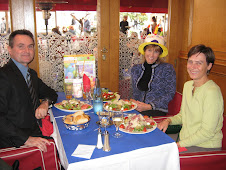
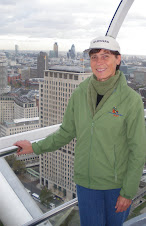
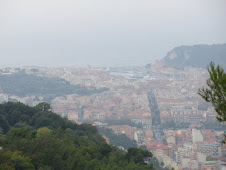
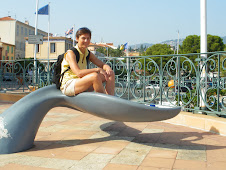
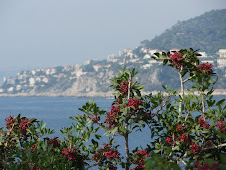
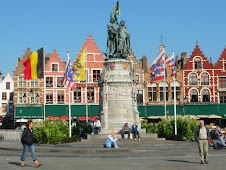
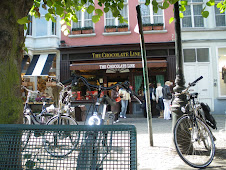
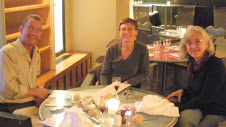
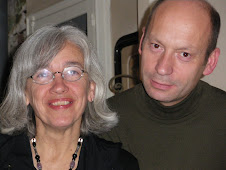
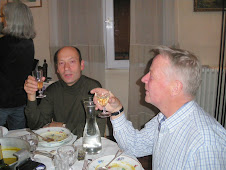
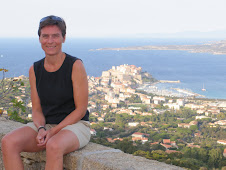
It's early in the morning; I'm up at my computer because my brain is racing and there's no point to trying to sleep anymore. My state of mind is reminiscent of my last month in the States just a year ago. It was just about this time that I had finally told my boss at Fannie Mae that I was quitting my job and moving to France. At this point I had found tenants for my apartment, set up a time to move all my things into storage, and begun a round of good bye lunches and dinners with friends, which would go on until the evening I left Dulles Airport, on August 25th.
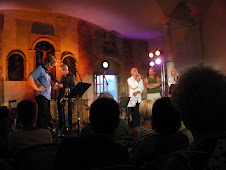
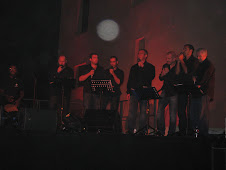
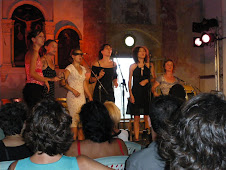
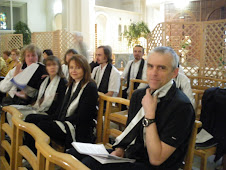
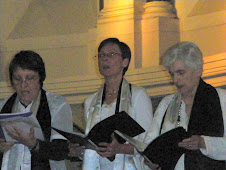
Over the past several weeks I have been going through many of the same motions here in Nice. A few weeks ago, the pastor in my church called me forward during the announcements in the service, to thank me for my contributions to the choir at the church and to wish me well (it was lovely to have my sister with me that morning). My mom arrived on Saturday to help me pack and clean my apartment; I have scheduled the walkthrough with the real estate agent for Friday morning - my move-out day. I have had a few good bye dinners with my friends here, including Priscilla (who ironically is in the States during my last week in France!), my choir friends, and some other friends I made during my time here. When I left Washington last year, I was stepping away from over 20 years of living in various communities; I have only been in Nice eleven months, but I have created a community here too, which I will be sad to leave.
But it's time to move on to the next chapter in my life.
Monday, July 27, 2009


Friday, July 17, 2009
My Shopping Cart In France
Herewith, a sampling of my supermarket purchases and eating habits in France, as they evolved during my stay, with commentary. (Purchases made variously in Carrefour, Casino, Monoprix, and Cocci Market supermarkets.)
September
Tapenade
Chocolate bar
Mini Caprice (cheese)
Skim Milk (Lait Ecreme)
Nonfat Yogurt (Yaourt Nature)
Roquefort (cheese)
Spinach
Bananas
Beer
Egglant Caviar (caviar aubergine)
Wasa crackers
Hummus
Granny Smith Apples
Carrots
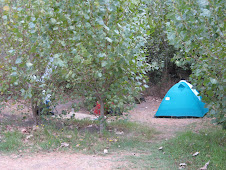
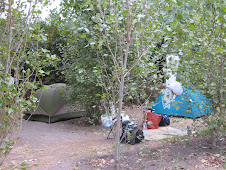
My first month in France, I spent a week camping in Corsica with Priscilla and then spent four days in Paris and Belgium with my friend Joanne. I was just getting used to reading labels in French supermarkets, and was busy also buying items I needed for my apartment, like a pillow, towels, sheets and a comforter.
September
Tapenade
Chocolate bar
Mini Caprice (cheese)
Skim Milk (Lait Ecreme)
Nonfat Yogurt (Yaourt Nature)
Roquefort (cheese)
Spinach
Bananas
Beer
Egglant Caviar (caviar aubergine)
Wasa crackers
Hummus
Granny Smith Apples
Carrots
My first month in France, I spent a week camping in Corsica with Priscilla and then spent four days in Paris and Belgium with my friend Joanne. I was just getting used to reading labels in French supermarkets, and was busy also buying items I needed for my apartment, like a pillow, towels, sheets and a comforter.
My food purchases in September reflected my effort to find the foods that I needed in my diet, as well as an effort to try new things I found in the supermarkets here. The small jars of tapenade and caviar aubergine represented my forays into French foods. Skim milk, plain nonfat yogurt, hummus and Granny Smith apples were staples of my refrigerator in the States. I spent quite a bit of time looking for crackers that first month, specifically something like the Stoned Wheat Thins that were another staple of my kitchen cabinet in Arlington. Nothing exists like this in France! I ended up defaulting to Wasa Fiber crackers, which I would never have bought in the States, but now buy regularly.
October
Jameson Whiskey
Bordeaux Red wine
Cote du Rhone red wine
Tabouli
Mustard
Chocolate bars
Butter cookies (Petit Tendre)
Tomatoes
Granny Smith Apples
Carrots
Special Muesli cereal
Ocean Spray Cranberry Juice
Yaourt Nature
Café Moulu (decaffeinated coffee)
Comte (cheese)
Dried Apricots (abricots entiers)
Jacobs Cream Crackers (from England)
Lemon Curd
Camembert President (cheese)
Orange Marmelade
Pecorino Romano (cheese)
Coucous
Pate de Foie (goose liver pate)
Tahini (purée de sesame blanc)
Moutarde bio à ancienne (organic mustard)
It wasn’t until October that I really settled down in my apartment and in Nice. After travelling to Corsica and Paris in September, and then spending the first week of October in NYC and Amherst, I returned to Nice, not to leave on any extended travel until November. My food purchases that month represented me starting to fill up my larder (jellies and jams), and establishing some food habits that I would continue through the year ahead. I began experimenting with various wines and cheeses. I also finally found some British crackers to satisfy my hunger. I found the supermarket version of foie gras (but bought the expensive versions for gifts), and found some wonderful mustards to enjoy with it. Priscilla brought me to an organic market (products known as "bio" or "biologique" here in France), where I found tahini, which would be used to make my own hummus in the months ahead. Priscilla also introduced me to the granola (muesli) that I would eat regularly for my breakfasts (with plain nonfat yogurt). And, of course, Lindt chocolate bars would be a regular purchase as well.
December
Tomato soup
Nonfat Yogurt
Mouchoirs (facial tissues)
Pretzels
Speculoos (ginger cookies)
Mousse Canard (duck pate)
Cream Crackers
Dried Apricots
December was a short month in Nice, with travel to Paris for several days and then to the States for the holidays. But you can see there was a bit of colder weather in Nice; I only buy soups when the temperature drops! Buying tissues was also a nod to the weather change. I had had Speculoos cookies at my friend’s home in Paris, so found them in the supermarket here – an excellent cookie! I tried duck pate, and found it good, and continued my love affair with plain, nonfat yogurt (which Priscilla thinks is a travesty, given that the French have an enormous selection of different flavors and versions of yogurt-type milk products.
January
Cassoulet (goose)
Chick peas (pois chiche)
V8 juice (4 x 20 cl cans)
Wasa crackers
Chocolate
Apple juice boxes (6 x 20 cl)
Camembert President
Special Muesli
Crème Taillefine (nonfat vanilla pudding cups x 4)
Yaourt Nature
Tomme noire pyrenées (cheese)
Bananas
Granny Smith Apples (pomme granny)
January was definitely colder, and I was drawn to buy a tin of goose meat cassoulet in the Carrefour where I shop. I didn’t actually prepare it until my parents came to visit in February, but it was excellent. I also was getting more familiar with my supermarket, and finding things that I hadn’t seen before, including V8 juice cans, and apple juice boxes, items that I liked because of their small size and transportability. (I rented a car and did a road trip to Switzerland and Germany in the middle of the month, and needed portable snacks!) I spent a little more time in the dairy aisle, and found a nonfat vanilla pudding, another favorite snack. And I continued to eat granny smith apples and experiment with cheeses.
March (in the US – brought back to France)
Ak-mak Crackers
Almonds (1/2 salt)
Turkish Apricots
Clif Bars (for Priscilla)
Chocolate bars 72% Belgian (mini – pack of three bars)
Trader Joes is my favorite specialty supermarket in the States. Every time I travelled back to the US, I made sure to shop at TJs, to bring back some items that I really wanted to have with me in France. This list from March is representative. Almonds have been a staple in my diet for almost a decade as a mid-day and travelling snack; and apricots serve a similar role. France doesn’t really have a good equivalent of Clif bars, and given that Priscilla was low on her supply, I brought back a bunch for her to have for her hikes. And TJs usually has a pretty good supply of dark chocolate…
March
Nutella pot 400g (glass jar of the chocolate spread)
Gouda (cheese)
Tomato Red Grappe
Clementines
Dried Figs (figue seche)
Dried Apricots
Pomme granny
Barres cereal canneberry (cranberry cereal bars)
Vanilla pudding cups
Wasa crackers
Toilet paper
Cantal Entre Deux (cheese)
Chocolate bars (70%, 85%, Menthe)
Cote de Luberon (red wine from the Luberon Valley which I visited in February)
Gnocchi 380 g
Epinard (spinach)
Tomates
After being in the US the first week in March, I returned to Nice, again, to settle down for an extended period of not travelling (although I couldn’t sit still for too long, and made excursions to Copenhagen and Paris in March and April, respectively). I continued my experimentation with cheeses and wines, but stuck to my yogurt and granola mornings. During my visit to my friend Becky’s home in DC in March, she had told me how much her kids liked Nutella. I knew about it, but hadn’t really eaten it before. I bought some here, and became hooked. (Also added to the drinking glass collection in my apartment, as the container was designed to be reused.)
I had experimented with granola bars here in France; they call them barres céréal. They were nothing like the Nature Valley Granola bars that were also a habit of mine in the States. These were very sweet, sticky, and made with rice more than oats, it seemed. But in March I saw some Cranberry bars, and gave them a try. They were still sweet and sticky, but they were good. I still brought back NV granola bars every time I was in the States, but I had found an acceptable corollary here.
My diet basically focuses on nonfat milk products, high fat cheese (for protein), non-yeast cereal products (granola, crackers), fruits and vegetables, and other grains like couscous. I have stopped buying pasta and bread for my kitchen – a habit I had started five years ago, and was not really prepared to change when I moved to France. That being said, I love bread, and in Nice, there are six boulangeries (bread shops) in a four block radius of my apartment. I eat bread regularly in France, (and bought croissants and baguettes for my guests!) I just don’t buy it to have in my kitchen. The fact that I don’t buy pasta is a habit that many find strange for me as a vegetarian eater, but I think this has kept my weight down! Gnocchi is my indulgence, and here in France, my favorite meal has been gnocchi with pesto sauce, augmented with black Niçoise olives, fresh tomatoes, and shredded Pecorino Romano cheese. Yum.
April
Skim milk
Stella Artois (cans of beer)
Tomme Blanche (cheese)
Speculoos cookies
Bergerac (red wine)
Burgogne Aligote (white wine from Burgundy)
Café Moulu dark (coffee)
Clementines
Pomme granny
Carrottes
The other staple in my kitchen is decaffeinated coffee. I tried several different types of coffee, but now buy the L’Or Maison du Café 100% Arabica coffee for my Italian coffee steamer. When I was visiting my friend Don in Tuscany over Thanksgiving, he recommended this coffee to me. Don drinks coffee all day, and had tried several different coffees in Italy, but it was at our Thanksgiving dinner at his friends’ home in Saertano that he was struck by the “good” cup of coffee. He called the host (an American) the next day to find out what brand it was – L’Or Maison du Café. I’ve been drinking it (or its caffeinated version, Intense, depending on my guests’ preference) ever since.
Starting in December, and through March and April, clementines were in season. And the specialty here in Nice is the Corsican Clementine, of which I was already familiar, because of the jar of Corsican Clementine jam that had been in my refrigerator when I moved into my apartment. The fresh clementines, tiny and easy to peel, were delicious, and a joy to eat – and they could be found everywhere during the season.
With the coming of the spring weather, I started buying more white wines, and found the white burgundy, which had been suggested to me, a lovely accompaniment to my lunch of foie gras and mustard and clementines. After a visit in May to Provence and a local vineyard, I became hooked on Provençal rosé wine, and continued to drink it through my travels to St. Tropez in June and Angoulême in July.
I haven’t really changed my eating habits here in France, but I have certainly enjoyed expanding my horizons gastronomically. Champagne and foie gras before dinner, and a platter of cheese after the main course, are my favorite traditions in France; my favorite sandwich is a baguette filled with camembert, sundried tomatoes soaked in olive oil, and pesto spread. My favorite dessert is anything chocolate, but the chocolate moelleux is amazing (soft chocolate center in the middle of a chocolate cake). I’m a fan of French wines generally, but the rosés of Provence are a highlight.
But they wouldn’t have been nearly as enjoyable if I hadn’t been eating and sharing these meals with people I know and liked – in France.
Thursday, July 16, 2009
July Memories
Bastille Day Fireworks in the Cannes Harbor with Priscilla – There was real artistry in the fireworks display, set to music in the harbor. These “Italian” fireworks were the first in a summer-long contest sponsored by the city of Cannes featuring shows presented by six different nations for the prize as the best fireworks.
A Guided Tour of the Hennessy Distillery in Cognac, courtesy of Pascal Lamaud – although we were taken through buildings specially constructed to show the process of making cognac, it was well done, and our English-speaking guide was clear in his presentation. We saw some casks that contained eau de vie (many eau de vies are used to create a blended cognac) from the late 1800’s – which will be eventually used in some cognac. Now that’s pretty cool. We ended the tour with a tasting of a very lovely cognac – now if I could only remember which one…
Sipping Bordeaux wine on the banks for the Garonne in Bordeaux – Nathalie and her mom were our hostesses for our two days in Bordeaux. We never made it to a winery (actually, they are called chateaux in this region), but Kenny made sure to buy a good bottle of red and white, which we all shared in the setting sun on the Promenade along the river, with the city skyline rolling out beyond us on the river.
Watching the Tour de France roll through Nice on the Promenade des Anglais – While Kenny and I had visited Monaco briefly the day before to see the preparations for the “Départ” of the Tour de France on July 4th, it wasn’t until the next day that we actually saw the riders. Chris, Kenny, Nathan and I headed down to the Promenade des Anglais, right near the Hotel Negresco, and joined the other Niçois and tourists along the metal barriers about thirty minutes before the peloton was scheduled to ride along the sea in front of us. There was a festive feeling in the air, and Tour vans travelled up and down the road as pretty young women decked out in Tour yellow hawked souvenir bags filled with Tour paraphernalia, all also in bright yellow. We watched the helicopters as they swooped over the Corniche toward Nice, heralding the oncoming riders. And suddenly cars were speeding past us, the helicopters were overhead and we watched the first five riders zip by in a blur. We were ready when, about two minutes later, the rest of the 120 riders came by in a pack, followed by platoons of automobiles – press cars, team cars, team cars with bikes – it was pretty amazing. And then it was all over. But we saw the Tour!
Riding the TGV – I’ve taken the train for long trips several times during my stay here: to Paris, to Aix-en-Provence, and to Tuscany. (I’ve also taken the regional train here on the Cote d’Azur, of which I am not talking about here.) I rode with Chris, Kenny and Nathan from Nice to Bordeaux last week on the TGV – an 8 hour trip (which happily involved no transfers or layovers). Like my other trips on the TGV, it was a very pleasant ride. I commend the French on this particular mode of transportation. Chris had gotten seat reservations for the three of them, which turned out to be two seats facing two seats, with a table in between. I sat with them in the fourth chair, and the young man who appeared and had that seat reserved very nicely agreed to take my reserved window seat further down the aisle. The train was on time, quiet (no one talked on their cell phones in the train car, as instructed by the many signs inside the car), and had plenty of room for luggage (racks between seats and overhead). The bathrooms were equipped and remained pretty clean the entire ride. And the scenery along the way was almost always worthy of looking out the window – as we sped through Provence, we saw the Cezanne mountains (so-called, because those are the ones he painted), the vineyards, the Esterel mountains (that hug the shoreline). As we passed Marseille and headed toward Toulouse, we saw more countryside and vineyards, and finally field after field of sunflowers. A ride to remember.
Watching the Wimbledon Men’s Singles Final 2009 – I’ve been in Europe the first week in July many times over the past 10 years, and not infrequently made watching Wimbledon a planned part of those European visits, simply because the matches are being played when you can watch them real time (as opposed to watching them in the States with the five hour difference). This year my cousin Matt was at Wimbledon, watching games on Centre Court and on the grounds, in the three days before he came to visit me in Nice, and see the Tour de France (which was starting on July 4th in Monaco). When Matt and his friend Andy arrived, their agenda, other than sitting on the beach, was to watch Wimbledon’s final matches. So on July 3rd, I walked the two of them down to the old city in Nice, to a British pub that I had seen just off the square with the Palais de Justice. And indeed, the men’s semi-final matches were being shown on wide screen TVs all afternoon. So Matt and Andy set themselves down to drink Guiness and lager and watch Federer and then Roddick, play (and win) their matches. The final between Federer and Roddick began at 3 p.m. on Sunday afternoon. By that time, my sister and her family had arrived in Nice. Matt and Andy were still in town, and planned to go back to the pub to watch the match. But I had made arrangements for my family to meet one of my church families, as the husband, like my sister, was a professional violinist; he plays with the Nice Philharmonic.
After watching the Tour de France riders pass through town, we took the tram up to the Roederer’s neighborhood near the University Valrose, and had a lovely afternoon sipping rose and drinking coffee in their backyard. Afterwards, Suzanne drove us to the Chagall Museum in the Cimiez neighborhood, as the museum, which usually has an admission fee, was free that afternoon, and it was worth a visit. So we got back to the apartment around 4:30 or 5. We were having my friend Priscilla over for dinner, as well as Matt and Andy, and so my nephew Nathan and I started preparing ratatouille for the meal. But at some point, we turned on the TV, and Nathan asked if we could watch the tennis final. Canal was broadcasting the final, but I didn’t get it on my television, except for the blurry, horizontally-challenged picture that you get when you aren’t supposed to be getting that channel. So we pulled up the “real time” scores on the Wimbledon internet site, to watch what we realized was at that point a very competitive match.
And then about 30 minutes later, after shouting out updates to the family from the computer and sort of seeing what was going on on the TV screen, Nathan found a link on the website to a radio broadcasting the game from Britain. So, he clicked on the link, and suddenly we were “listening to the game” – getting a play-by-play real time – my first time following a tennis game on the radio! And then, around 6:30 p.m., suddenly the TV went from blurry to clear, and we were watching the game in pictures too. The match was heading towards its epic fifth set, and our interest in watching at that point was very keen. We were cheering for the American, Roddick, but the players were well matched, and it was pretty clear that the one of them would have to lose concentration first for someone to win. We kept the volume off the TV set, and kept listening to the British radio broadcast, as the television broadcast was in French. And we kept watching, until the bitter end – Roddick was the one to break, and it was Federer’s 15th championship to celebrate. This Wimbledon I will not forget for a very long time.
L’Église Réformée de Nice – The Anglican church on Boulevard Victor Hugo, housing the French Protestant congregation in the center city of Nice, has been the center of my community here over the past 10 months. I found the church last September, and was invited to join a choir there in October, and sang in services there at Christmastime, Palm Sunday and Pentecost Sunday. My best French friends in Nice are the people I met in that congregation. And so it was lovely to have my favorite pastor there (there are three), Lionel Tambon, call me up to the lecturn two Sundays ago, to thank me for my contributions to the musical life of the church, and wish me well on my journey back to the States. I was touched that he invited me to say a few words too, and, in French, I thanked the congregation and let them know they were my “petite famille” in France, and how much I had enjoyed getting to know them during my stay here. Tu me manqueras! (I will miss you!)
Systemic Risk – Draft Article III
This is the third in a series of articles I am writing with my co-author on Systemic Risk - a hot topic, for sure! Below is the Executive Summary and the first page, which looks at definitions of systemic risk. Thought it might be helpful for some of my readers. Feedback welcome, of course!
Systemic Risk – A pragmatic starting point
Executive Summary
In the wake of the global financial collapse of 2008, governments and institutions are rethinking their approach to risk management, and specifically, systemic risk. Systemic risk is the risk that an event, or series of events, will cause the collapse of an economy or financial system. Recent reports issued by several governments have focused their recommendations on ways to better evaluate systemic risk and manage the potential for catastrophic events across the financial markets. But key to understanding and evaluating factors that may cause systemic risk is having the data to make those observations. Unreliable or inaccurate data has already been identified as a contributing factor to the collapse of the mortgage-backed securities (MBS) market, and the web of collateralized debt obligations (CDOs) that were created using the MBS. Current industry and regulatory practices do not support the level of information-gathering required to assess institutional risk, much less systemic risk. If we are to learn from our mistakes, having reliable and accurate data is a critical requirement; understanding this need is a first step.
What is Systemic Risk?
"I think that the Fed probably performed better than most other regulators prior to the crisis taking place, but I think they’d be the first to acknowledge that in dealing with systemic risk and anticipating systemic risk, they didn’t do everything that needed to be done," US President Obama. [1]
Over the past six months, the phrase “systemic risk” has been used by politicians and regulators around the globe in discussing their response to the global financial crisis that erupted in 2008. Governments are now proposing new approaches to managing risk, and references to “assessing systemic risk” are frequently included as an important component to those proposals. But even as recent government reports from the United Kingdom, the European Union and the United States stress the need to address “systemic risk,” there is no shared definition of this risk.
One of the more cogent studies we have found lists three definitions of systemic risk frequently used by banking institutions:
1. A “big” shock or macro-shock that produces nearly simultaneous, large, adverse effects on most or all of the domestic economy or system.
2. An event that sets in motion a series of successive losses along a chain of institutions or markets comprising a system (the domino effect).
3. An initial, exogenous external shock that causes spillover, but does not involve direct causation and depends on weaker and more indirect connections.[2]
The second definition above is generally consistent with that of the US Federal Reserve (the Fed). Likewise, the Bank for International Settlements (BIS) defines systemic risk as “the risk that the failure of a participant to meet its contractual obligations may in turn cause other participants to default with a chain reaction leading to broader financial difficulties” (BIS 1994, 177).
The existence of three definitions points out the difficulty of managing systemic risk, in that there may be no consensus for what possible event government regulators or institutions are preparing, and therefore what data needs to be collected to conduct their supervision. Having a common understanding of what is systemic risk is a prerequisite to knowing what data collection is necessary to manage that risk.
__________________
[1] Labaton, Steve, “Behind the Scenes, Fed Chief Advocates Bigger Role,” New York Times, 6/23/09
Systemic Risk – A pragmatic starting point
Executive Summary
In the wake of the global financial collapse of 2008, governments and institutions are rethinking their approach to risk management, and specifically, systemic risk. Systemic risk is the risk that an event, or series of events, will cause the collapse of an economy or financial system. Recent reports issued by several governments have focused their recommendations on ways to better evaluate systemic risk and manage the potential for catastrophic events across the financial markets. But key to understanding and evaluating factors that may cause systemic risk is having the data to make those observations. Unreliable or inaccurate data has already been identified as a contributing factor to the collapse of the mortgage-backed securities (MBS) market, and the web of collateralized debt obligations (CDOs) that were created using the MBS. Current industry and regulatory practices do not support the level of information-gathering required to assess institutional risk, much less systemic risk. If we are to learn from our mistakes, having reliable and accurate data is a critical requirement; understanding this need is a first step.
What is Systemic Risk?
"I think that the Fed probably performed better than most other regulators prior to the crisis taking place, but I think they’d be the first to acknowledge that in dealing with systemic risk and anticipating systemic risk, they didn’t do everything that needed to be done," US President Obama. [1]
Over the past six months, the phrase “systemic risk” has been used by politicians and regulators around the globe in discussing their response to the global financial crisis that erupted in 2008. Governments are now proposing new approaches to managing risk, and references to “assessing systemic risk” are frequently included as an important component to those proposals. But even as recent government reports from the United Kingdom, the European Union and the United States stress the need to address “systemic risk,” there is no shared definition of this risk.
One of the more cogent studies we have found lists three definitions of systemic risk frequently used by banking institutions:
1. A “big” shock or macro-shock that produces nearly simultaneous, large, adverse effects on most or all of the domestic economy or system.
2. An event that sets in motion a series of successive losses along a chain of institutions or markets comprising a system (the domino effect).
3. An initial, exogenous external shock that causes spillover, but does not involve direct causation and depends on weaker and more indirect connections.[2]
The second definition above is generally consistent with that of the US Federal Reserve (the Fed). Likewise, the Bank for International Settlements (BIS) defines systemic risk as “the risk that the failure of a participant to meet its contractual obligations may in turn cause other participants to default with a chain reaction leading to broader financial difficulties” (BIS 1994, 177).
The existence of three definitions points out the difficulty of managing systemic risk, in that there may be no consensus for what possible event government regulators or institutions are preparing, and therefore what data needs to be collected to conduct their supervision. Having a common understanding of what is systemic risk is a prerequisite to knowing what data collection is necessary to manage that risk.
__________________
[1] Labaton, Steve, “Behind the Scenes, Fed Chief Advocates Bigger Role,” New York Times, 6/23/09
[2] “What is Systemic Risk, and Do Bank Regulators Retard or Contribute to It?” George G. Kauffman & Kenneth E. Scott, The Independent Review, v. VII, no. 3, , Winter 2003, at 371.
Sunday, June 28, 2009
A Perfect Birthday Gift
As she said, it was an uncharacteristic gift for her.
And indeed, you would not ordinarily find “golf” and “Priscilla” in the same sentence – in fact, it would be extraordinary. The world of golf is the antithesis of all that Priscilla espouses in her life (forgetting for a moment that she does translation work for Hermes and the luxury goods conglomerate LMVH – after all, that’s business – but then so is golf, some would say!). But Priscilla knew that I played golf, and had a hankering of sorts to play here in France, and so for my birthday she gave me a gift certificate to play a round of golf at a nearby Cote d’Azur course.
That was May 28th. I flew to the States for a round of family visits on June 3rd, and before I left, Priscilla reminded me to make a reservation at the course soon – the idea was that she would accompany me on my outing, and she wanted to make sure she had some time reserved on her calendar. We came up with a suggested timing, the week of June 22nd, but I didn’t actually try to make a reservation until I returned from my travels the week of June 15th.
That Monday, the 15th, looking over the brochure for the Opio-Valbonne course, I found a website listed, through which one could reserve a tee time. On the reservation site, I sent in a request to play the following week, on Wednesday, the 24th, with an afternoon start around 3 p.m. (Making tee times via the internet is pretty common in the States too.) I received a confirmation via email for my visit:
Dear Madam,
Further to your request, we are pleased to confirm the following booking :
On Wednesday 24th June at 3:06 pm for 1 player.
Please let us know your handicap.
Best Regards
Emeline
Well, that was cool. Reservation made! Except for the one request – I don’t have a handicap. One receives a handicap after one has registered with one’s golf club and records in the onsite computer one’s scores for play on that course. When one has played a certain number of games, the computer spits out a number that is your “handicap” – a numerical measure of your ability, based on the tees on the course. It is meant to show your potential, but folks tend not to improve their scores (and therefore, not their handicap).
So, I wrote back to Emeline.
Cher Emeline,
Merci pour votre confirmation.
J'ai joué au golf depuis que je suis jeune, mais je ne joue pas régulièrement, donc je n'ai pas un handicap. Je sais le jeu et ses règles très bien, cependant. Ma marque est généralement autour de 110-120.
Je tiens à vous rappeler que j'ai un certificat-cadeau. Aussi, si il n’y pas des autres qui jouent avec moi, est-ce que possible mon amie m’accompagne autour la course? Elle ne le joue pas, mais elle me donne le certificat pour mon anniversaire, donc, si possible, s'il vous plaȋt, faites le moi savoir.
À bientȏt,
Margarita Brose
[Tr: Thanks for your confirmation. I’ve played golf since I was young, but I don’t play regularly, therefore I don’t have a handicap. I know the game and the rules very well, however. My score is generally around 110-120.
I want to remind you that I have a gift certificate. Also, if there aren’t any others playing with me, is it possible that my girlfriend accompany me on the course? She doesn’t play, but she gave me the certificate for my birthday, so if it is possible, would you please let me know?]
Broses and Golf: A Short History
I figured it was worth a try. I have been playing golf since I was a teenager, and my dad first took me out to play at Cherry Hill in North Amherst, I think it must have been. My Dad grew up playing golf, because his Dad was a golfer. My grandfather Brose enjoyed the game, but he also thought it was a great way to meet people and to make business contacts. He would tell stories of how he got great stock tips on the golf course. I was listening (and have since become a pretty good stock picker myself). My grandfather was an astute investor, and I don’t believe for a minute he meant he sought out nonpublic information from his golf companions, but he was a good listener, and made some shrewd investments.
My Dad played off and on through his working years (he spent more time playing tennis), but when he retired in the late 1990’s, he turned to golf full-time. And he began to encourage my brother and me to play more as well. We didn’t need too much encouragement. Several years earlier, when I began working as an attorney at the Securities and Exchange Commission in Washington (and learning all about insider trading, and deciding my grandfather was not an inside trader!), I found some like-minded colleagues who were up for an occasional nine holes at the Hains Point Golf Course in the early morning before work. And a few years later, I found that my new husband enjoyed golf as well, and soon our vacations became pretty golf-focused.
My husband Bob encouraged me to take private lessons, and he found a teacher for me at a local public course. My teacher was great, and I was an eager learner – I really did want to get better. My swing improved, and my game improved. For a few years, we played regularly on Saturday afternoons or early evenings during the summer, as there was a fairly decent par 3 public course just a half mile from our condo in Falls Church.
My Dad continued to encourage my game as well, and one year his birthday gift to me was a two-day golf clinic at a highly-acclaimed Western Massachusetts course, Crumpin-Fox. It was fantastic, honestly. The first day was spent in group lessons, and some one-on-one attention; day two was 18 holes of golf, accompanied by an instructor. I’d never known how to read a course; the tips for how to size up the hole, avoid traps, and make good intelligent shots was great. It was the first time I was told that I had the potential to be a good player (by a pro, that is, my Dad told me that all the time).
Golf and Business
While I was enjoying the challenge of becoming a better player, I also knew that being able to play golf was a business advantage for me. As I learned from my grandfather, men in business like to play golf. When I went to an industry conference in Desert Springs, California in 1999 (as with most conferences of this type), the first day was an optional golf day for the conference attendees. I made sure to sign up to play. And I found out that there was no need for me to be self-conscious or nervous about playing with colleagues or my superiors – on the golf course, at least among men, there are very few sins. Golf is a game where guys that are great players are gracious (generally) to their compatriots that whack at the ball. And the whackers may be frustrated by their game, but they aspire to be better – and for some reason don’t mind playing (generally) with folks that are much better than they are.
I had the experience of playing a few more times in work-organized golf days, and found the respect of men (my colleagues) for women (me) that played the game was more than worth the occasional embarrassment of whiffing the ball on the tee.
Reserving at Opio-Valbonne
So, back to the receptionist at Opio-Valbonne.
I forgot, we’re in France. Here’s the reply:
Cher Mme Brose,
Pourriez-vous nous re-dire quel est votre handicap , autour de 110 -120 ?
Pour jouer sur notre parcours, nous demandons au minimum que les joueurs possède la carte verte (hcp 53) ainsi qu'une licence à jour.
Peut-être avez vous une attestation de votre club qui nous prouvera que vous jouer bien au golf.
Sinon, sans ces 2 documents, vous pourrez utiliser notre practice.
Recevez nos meilleures salutations.
[Tr: Can you tell us again what is your handicap, around 110-120? To play on our course, we ask at a minimum that the players have a green card (handicap 53) and a day license. Perhaps you have a club attestation that you are a good golf player? Without these two documents, you can only use our driving range. Please accept our best greetings.]
The Opio-Valbonne course is on the Cote d’Azur, and of course caters to the rich Europeans who live in near obscurity in the surrounding villages (the course is located just north of Cannes). It should not have been a surprise that they would try and keep out the riff-raff like me. And France is a country that is all about making sure you have a certificate before you do something athletic. (Refer to my earlier blogs on running a 10km road race in France.)
So, quite deflated, I wrote back to the receptionists (this one was named Karima):
Karima,
Je n'ai pas la carte verte, mais je joue avec une handicap de 53.
Je n'ai pas un club aux États Unis où je joue régulièrement. Seulement mon père peut attester que je joue bien au golf!
Il semble donc que je ne peux pas jouer à votre parcours de golf. Confirmez, s'il vous plaȋt.
Avec mes sentiments meilleurs,
Margarita Brose
[Tr: I don’t have a green card, but I play with a handicap of 53. I don’t have a club in the US where I play regularly. Only my father can attest that I’m a good golf player! It looks like I can’t play on your course. Please confirm. With my best wishes.]
Chère Mme Brose,
Je ne peux malheureusement pas prendre votre réservation sans attestation de niveau de jeu, ni licence. Par contre vous pouvez utiliser notre practice, putting green et pitching green.
Merci et Bonne soirée.
[Tr: Unfortunately I can’t take your reservation without an attestation of your game or a license. On the other hand, you can your our driving range, putting green and pitching green. Thank you and have a good evening.]
I copied Priscilla on this last round of emails with Golf Opio-Valbonne. She called me from her vacation in Corsica to let me know that she’d be happy to get in touch with the manager of the course when she returned, as that is how she got the gift certificate in the first place. Priscilla is involved with the Club des Entrepreneurs in Grasse, the city where she lives; it is a business association for small business owners like herself. She met the golf course manager through this association, and was willing to try and figure out how to get around the handicap issue for me. She was really quite eager for me to take advantage of my birthday gift!
I told her that I would ask a choir friend of mine too, about the license requirement. I knew that Philippe played golf, as he and my father had talked about it when Philippe and Odette entertained my parents during their visit back in February. I saw Philippe that Friday night at our end of year choir party, and told him my story, of trying to get a reservation at the Opio course without a license. And he did confirm for me, indeed, this was something I needed to play. He hadn’t realized, I guess, that I played as well, given that his previous conversation had been with my Dad, not me.
Golf Game is a Go!
I was surprised to hear from Philippe the following Monday, however. In a conversation in French, of which I understood about half of what he was saying, I did get this much – he wanted to confirm the course for which I held my gift certificate, and said that he had a friend in town who would be up for playing golf, and he often played at that course, and could probably get me on the course without the handicap being a problem. Was I available Thursday or Friday to play? Friday, I said, hopefully. He said he’d call back when he could confirm that we could all play.
Priscilla emailed me on Tuesday when she returned from Corsica that she had made an effort to reach the manager at the golf course, unsuccessfully. I told her to wait, that it looked like I might be playing after all. She was happy to hear about the turn of events, as she had thought that it would be more fun for me to play with a group of folks (rather than have her come along for the ride), and I didn’t disagree.
I heard from Philippe on Wednesday morning. It was all confirmed, we would be playing, a foursome, on Friday morning at 9:45 a.m. He would pick me up at 8:15 a.m. that morning. And I would be able to borrow clubs from one of the men, as his wife was currently unable to play. You play right-handed?, he asked. Yes, I said. [I am left-handed, but have always played golf right-handed, as my father decided when I started out that I would be a stronger player as a rightie – and I think it was the right (natch!) decision.]
Friday morning arrived. Philippe picked me up early, and we took off for Opio-Valbonne, about a 45 minute drive from Nice, along small, winding roads in the countryside from Nice toward Grasse. We arrived first, but soon Michel arrived (the 10-handicap player), a friend and former colleague of Philippe – the two of them had worked in the African country of Gabon – in fact, Michel still works there one week a month, living outside Cannes the rest of the time. And then the other Michel arrived, with my clubs. He plays with Philippe and Michel occasionally, I gathered, and lives in Antibes, a seaside town between Cannes and Nice.
We had some time to do some practice swings before our 9:45 team time. I was fully outfitted for my day on the course: golf glove (gant) borrowed from Philippe, golf clubs (McGregor irons and Cobra woods) from Michel, a pull cart (chariot) rented from the clubhouse (thanks to Philippe), and golf balls and tees borrowed variously from the guys. I wore my Nike Pegasus running shoes, instead of renting golf shoes (as Priscilla had graciously offered as a gift), as the (good player) Michel had said they would be fine. And I wore my University of Pennsylvania casquette (baseball cap), fitting in with the guys just fine.
Golfing in France
My swing off the first tee was magnificent! Wow, like these clubs, I thought. And I continued to hit well through the first par 4 hole, ending up with a bogie. On the second hole, par 3, I actually parred the hold. Amazing, I thought. What dream was I in? Playing golf in the south of France, playing perfect strokes with borrowed clubs, in running shoes, and with men that are only speaking French to me.
It was a great until about the 4th hole. And then, the lack of practice and my lack of playing started to kick in. I ended up with a 56 on the front nine, and 66 on the back nine – the last two holes were, unforgivingly, par 5 holes. But, given that the last time I had played was in October, I didn’t feel so bad. As I told Odette later that day, “Je suis content avec mon jeu.” I was happy with how I played, given everything.
And I wasn’t surprised when the (good player) Michel said to me as we walked off the 18th hole, You know, with some more practice, you would have a pretty good handicap (or words to that effect, in French). Yeah, I know.
Je te remercie, Priscilla. Un cadeau excellent!
And indeed, you would not ordinarily find “golf” and “Priscilla” in the same sentence – in fact, it would be extraordinary. The world of golf is the antithesis of all that Priscilla espouses in her life (forgetting for a moment that she does translation work for Hermes and the luxury goods conglomerate LMVH – after all, that’s business – but then so is golf, some would say!). But Priscilla knew that I played golf, and had a hankering of sorts to play here in France, and so for my birthday she gave me a gift certificate to play a round of golf at a nearby Cote d’Azur course.
That was May 28th. I flew to the States for a round of family visits on June 3rd, and before I left, Priscilla reminded me to make a reservation at the course soon – the idea was that she would accompany me on my outing, and she wanted to make sure she had some time reserved on her calendar. We came up with a suggested timing, the week of June 22nd, but I didn’t actually try to make a reservation until I returned from my travels the week of June 15th.
That Monday, the 15th, looking over the brochure for the Opio-Valbonne course, I found a website listed, through which one could reserve a tee time. On the reservation site, I sent in a request to play the following week, on Wednesday, the 24th, with an afternoon start around 3 p.m. (Making tee times via the internet is pretty common in the States too.) I received a confirmation via email for my visit:
Dear Madam,
Further to your request, we are pleased to confirm the following booking :
On Wednesday 24th June at 3:06 pm for 1 player.
Please let us know your handicap.
Best Regards
Emeline
Well, that was cool. Reservation made! Except for the one request – I don’t have a handicap. One receives a handicap after one has registered with one’s golf club and records in the onsite computer one’s scores for play on that course. When one has played a certain number of games, the computer spits out a number that is your “handicap” – a numerical measure of your ability, based on the tees on the course. It is meant to show your potential, but folks tend not to improve their scores (and therefore, not their handicap).
So, I wrote back to Emeline.
Cher Emeline,
Merci pour votre confirmation.
J'ai joué au golf depuis que je suis jeune, mais je ne joue pas régulièrement, donc je n'ai pas un handicap. Je sais le jeu et ses règles très bien, cependant. Ma marque est généralement autour de 110-120.
Je tiens à vous rappeler que j'ai un certificat-cadeau. Aussi, si il n’y pas des autres qui jouent avec moi, est-ce que possible mon amie m’accompagne autour la course? Elle ne le joue pas, mais elle me donne le certificat pour mon anniversaire, donc, si possible, s'il vous plaȋt, faites le moi savoir.
À bientȏt,
Margarita Brose
[Tr: Thanks for your confirmation. I’ve played golf since I was young, but I don’t play regularly, therefore I don’t have a handicap. I know the game and the rules very well, however. My score is generally around 110-120.
I want to remind you that I have a gift certificate. Also, if there aren’t any others playing with me, is it possible that my girlfriend accompany me on the course? She doesn’t play, but she gave me the certificate for my birthday, so if it is possible, would you please let me know?]
Broses and Golf: A Short History
I figured it was worth a try. I have been playing golf since I was a teenager, and my dad first took me out to play at Cherry Hill in North Amherst, I think it must have been. My Dad grew up playing golf, because his Dad was a golfer. My grandfather Brose enjoyed the game, but he also thought it was a great way to meet people and to make business contacts. He would tell stories of how he got great stock tips on the golf course. I was listening (and have since become a pretty good stock picker myself). My grandfather was an astute investor, and I don’t believe for a minute he meant he sought out nonpublic information from his golf companions, but he was a good listener, and made some shrewd investments.
My Dad played off and on through his working years (he spent more time playing tennis), but when he retired in the late 1990’s, he turned to golf full-time. And he began to encourage my brother and me to play more as well. We didn’t need too much encouragement. Several years earlier, when I began working as an attorney at the Securities and Exchange Commission in Washington (and learning all about insider trading, and deciding my grandfather was not an inside trader!), I found some like-minded colleagues who were up for an occasional nine holes at the Hains Point Golf Course in the early morning before work. And a few years later, I found that my new husband enjoyed golf as well, and soon our vacations became pretty golf-focused.
My husband Bob encouraged me to take private lessons, and he found a teacher for me at a local public course. My teacher was great, and I was an eager learner – I really did want to get better. My swing improved, and my game improved. For a few years, we played regularly on Saturday afternoons or early evenings during the summer, as there was a fairly decent par 3 public course just a half mile from our condo in Falls Church.
My Dad continued to encourage my game as well, and one year his birthday gift to me was a two-day golf clinic at a highly-acclaimed Western Massachusetts course, Crumpin-Fox. It was fantastic, honestly. The first day was spent in group lessons, and some one-on-one attention; day two was 18 holes of golf, accompanied by an instructor. I’d never known how to read a course; the tips for how to size up the hole, avoid traps, and make good intelligent shots was great. It was the first time I was told that I had the potential to be a good player (by a pro, that is, my Dad told me that all the time).
Golf and Business
While I was enjoying the challenge of becoming a better player, I also knew that being able to play golf was a business advantage for me. As I learned from my grandfather, men in business like to play golf. When I went to an industry conference in Desert Springs, California in 1999 (as with most conferences of this type), the first day was an optional golf day for the conference attendees. I made sure to sign up to play. And I found out that there was no need for me to be self-conscious or nervous about playing with colleagues or my superiors – on the golf course, at least among men, there are very few sins. Golf is a game where guys that are great players are gracious (generally) to their compatriots that whack at the ball. And the whackers may be frustrated by their game, but they aspire to be better – and for some reason don’t mind playing (generally) with folks that are much better than they are.
I had the experience of playing a few more times in work-organized golf days, and found the respect of men (my colleagues) for women (me) that played the game was more than worth the occasional embarrassment of whiffing the ball on the tee.
Reserving at Opio-Valbonne
So, back to the receptionist at Opio-Valbonne.
I forgot, we’re in France. Here’s the reply:
Cher Mme Brose,
Pourriez-vous nous re-dire quel est votre handicap , autour de 110 -120 ?
Pour jouer sur notre parcours, nous demandons au minimum que les joueurs possède la carte verte (hcp 53) ainsi qu'une licence à jour.
Peut-être avez vous une attestation de votre club qui nous prouvera que vous jouer bien au golf.
Sinon, sans ces 2 documents, vous pourrez utiliser notre practice.
Recevez nos meilleures salutations.
[Tr: Can you tell us again what is your handicap, around 110-120? To play on our course, we ask at a minimum that the players have a green card (handicap 53) and a day license. Perhaps you have a club attestation that you are a good golf player? Without these two documents, you can only use our driving range. Please accept our best greetings.]
The Opio-Valbonne course is on the Cote d’Azur, and of course caters to the rich Europeans who live in near obscurity in the surrounding villages (the course is located just north of Cannes). It should not have been a surprise that they would try and keep out the riff-raff like me. And France is a country that is all about making sure you have a certificate before you do something athletic. (Refer to my earlier blogs on running a 10km road race in France.)
So, quite deflated, I wrote back to the receptionists (this one was named Karima):
Karima,
Je n'ai pas la carte verte, mais je joue avec une handicap de 53.
Je n'ai pas un club aux États Unis où je joue régulièrement. Seulement mon père peut attester que je joue bien au golf!
Il semble donc que je ne peux pas jouer à votre parcours de golf. Confirmez, s'il vous plaȋt.
Avec mes sentiments meilleurs,
Margarita Brose
[Tr: I don’t have a green card, but I play with a handicap of 53. I don’t have a club in the US where I play regularly. Only my father can attest that I’m a good golf player! It looks like I can’t play on your course. Please confirm. With my best wishes.]
Chère Mme Brose,
Je ne peux malheureusement pas prendre votre réservation sans attestation de niveau de jeu, ni licence. Par contre vous pouvez utiliser notre practice, putting green et pitching green.
Merci et Bonne soirée.
[Tr: Unfortunately I can’t take your reservation without an attestation of your game or a license. On the other hand, you can your our driving range, putting green and pitching green. Thank you and have a good evening.]
I copied Priscilla on this last round of emails with Golf Opio-Valbonne. She called me from her vacation in Corsica to let me know that she’d be happy to get in touch with the manager of the course when she returned, as that is how she got the gift certificate in the first place. Priscilla is involved with the Club des Entrepreneurs in Grasse, the city where she lives; it is a business association for small business owners like herself. She met the golf course manager through this association, and was willing to try and figure out how to get around the handicap issue for me. She was really quite eager for me to take advantage of my birthday gift!
I told her that I would ask a choir friend of mine too, about the license requirement. I knew that Philippe played golf, as he and my father had talked about it when Philippe and Odette entertained my parents during their visit back in February. I saw Philippe that Friday night at our end of year choir party, and told him my story, of trying to get a reservation at the Opio course without a license. And he did confirm for me, indeed, this was something I needed to play. He hadn’t realized, I guess, that I played as well, given that his previous conversation had been with my Dad, not me.
Golf Game is a Go!
I was surprised to hear from Philippe the following Monday, however. In a conversation in French, of which I understood about half of what he was saying, I did get this much – he wanted to confirm the course for which I held my gift certificate, and said that he had a friend in town who would be up for playing golf, and he often played at that course, and could probably get me on the course without the handicap being a problem. Was I available Thursday or Friday to play? Friday, I said, hopefully. He said he’d call back when he could confirm that we could all play.
Priscilla emailed me on Tuesday when she returned from Corsica that she had made an effort to reach the manager at the golf course, unsuccessfully. I told her to wait, that it looked like I might be playing after all. She was happy to hear about the turn of events, as she had thought that it would be more fun for me to play with a group of folks (rather than have her come along for the ride), and I didn’t disagree.
I heard from Philippe on Wednesday morning. It was all confirmed, we would be playing, a foursome, on Friday morning at 9:45 a.m. He would pick me up at 8:15 a.m. that morning. And I would be able to borrow clubs from one of the men, as his wife was currently unable to play. You play right-handed?, he asked. Yes, I said. [I am left-handed, but have always played golf right-handed, as my father decided when I started out that I would be a stronger player as a rightie – and I think it was the right (natch!) decision.]
Friday morning arrived. Philippe picked me up early, and we took off for Opio-Valbonne, about a 45 minute drive from Nice, along small, winding roads in the countryside from Nice toward Grasse. We arrived first, but soon Michel arrived (the 10-handicap player), a friend and former colleague of Philippe – the two of them had worked in the African country of Gabon – in fact, Michel still works there one week a month, living outside Cannes the rest of the time. And then the other Michel arrived, with my clubs. He plays with Philippe and Michel occasionally, I gathered, and lives in Antibes, a seaside town between Cannes and Nice.
We had some time to do some practice swings before our 9:45 team time. I was fully outfitted for my day on the course: golf glove (gant) borrowed from Philippe, golf clubs (McGregor irons and Cobra woods) from Michel, a pull cart (chariot) rented from the clubhouse (thanks to Philippe), and golf balls and tees borrowed variously from the guys. I wore my Nike Pegasus running shoes, instead of renting golf shoes (as Priscilla had graciously offered as a gift), as the (good player) Michel had said they would be fine. And I wore my University of Pennsylvania casquette (baseball cap), fitting in with the guys just fine.
Golfing in France
My swing off the first tee was magnificent! Wow, like these clubs, I thought. And I continued to hit well through the first par 4 hole, ending up with a bogie. On the second hole, par 3, I actually parred the hold. Amazing, I thought. What dream was I in? Playing golf in the south of France, playing perfect strokes with borrowed clubs, in running shoes, and with men that are only speaking French to me.
It was a great until about the 4th hole. And then, the lack of practice and my lack of playing started to kick in. I ended up with a 56 on the front nine, and 66 on the back nine – the last two holes were, unforgivingly, par 5 holes. But, given that the last time I had played was in October, I didn’t feel so bad. As I told Odette later that day, “Je suis content avec mon jeu.” I was happy with how I played, given everything.
And I wasn’t surprised when the (good player) Michel said to me as we walked off the 18th hole, You know, with some more practice, you would have a pretty good handicap (or words to that effect, in French). Yeah, I know.
Je te remercie, Priscilla. Un cadeau excellent!
Tuesday, June 23, 2009
Summertime in Nice
It was the potted palms I noticed first.
I was running along the Promenade the other morning, and realized I was doing an obstacle course along one section, ducking under palm branches and weaving between the eight large white boxes housing the palm plants. They weren't on the Promenade last month.
Summer has come to Nice. That means that the tourists are here. I had noticed some of the preparations, when they started back in April, after Easter. The beach clubs, which previously had only a few chaise lounges set up on the beach, all of sudden started setting up rows and rows of the chairs and the accompanying parasols along the seafront.
Then the "Postes de Secours" appeared on the beaches. These are the lifeguard posts on several of the public beaches along the Promenade. They include the firefighters, too, for some unidentified reason, other than, perhaps, they are good looking. The firefighters here are definitely cute.
The potted palms along the Promenade are a beautification element provided by the city, for the benefit of our visitors. And the newly-sanded volleyball courts on the beach are for the entertainment of our visitors. And the concerts on the beach are all probably part of that entertainment package. Nice likes to keep its tourists happy.
For me, the other starkly apparent change in the city is the number of English-speaking people. Of course, Nice is a cosmopolitan city, with its share of Italians and English living here on a regular basis, along with Russians and Germans. But the English pretty much keep to themselves, so I haven't had to interact with them much during my time here. But now, I am getting asked directions on the street by Americans (for a long time, it was only by French people). I hear American English on the beach, in restaurants, in the supermarket. I forgot that Nice was a destination for those from the States too.
My friends here (Priscilla, Christiane, and Erick) are all happy to have the tourists back in Nice. They like the activity and excitement that they bring to the city. But me, I liked my adopted the city the way I found it last August. By the time I had arrived the last week of August, most of the tourists had left the city (although the beach clubs did not really roll up the chaise lounges for good until the end of October). I enjoyed the quiet beaches and having the sea to myself most of the time. I liked it when the merchants spoke to me in French, rather than assuming I was from somewhere else. I preferred running along the Promenade with other serious runners, rather than with the tourists getting in their first workout in a long time.
I only have six weeks left to my sojourn here along the Mediterranean. I'm going to enjoy every moment, even if I have to share it with thousands of others here, like me, here for the sun.
I was running along the Promenade the other morning, and realized I was doing an obstacle course along one section, ducking under palm branches and weaving between the eight large white boxes housing the palm plants. They weren't on the Promenade last month.
Summer has come to Nice. That means that the tourists are here. I had noticed some of the preparations, when they started back in April, after Easter. The beach clubs, which previously had only a few chaise lounges set up on the beach, all of sudden started setting up rows and rows of the chairs and the accompanying parasols along the seafront.
Then the "Postes de Secours" appeared on the beaches. These are the lifeguard posts on several of the public beaches along the Promenade. They include the firefighters, too, for some unidentified reason, other than, perhaps, they are good looking. The firefighters here are definitely cute.
The potted palms along the Promenade are a beautification element provided by the city, for the benefit of our visitors. And the newly-sanded volleyball courts on the beach are for the entertainment of our visitors. And the concerts on the beach are all probably part of that entertainment package. Nice likes to keep its tourists happy.
For me, the other starkly apparent change in the city is the number of English-speaking people. Of course, Nice is a cosmopolitan city, with its share of Italians and English living here on a regular basis, along with Russians and Germans. But the English pretty much keep to themselves, so I haven't had to interact with them much during my time here. But now, I am getting asked directions on the street by Americans (for a long time, it was only by French people). I hear American English on the beach, in restaurants, in the supermarket. I forgot that Nice was a destination for those from the States too.
My friends here (Priscilla, Christiane, and Erick) are all happy to have the tourists back in Nice. They like the activity and excitement that they bring to the city. But me, I liked my adopted the city the way I found it last August. By the time I had arrived the last week of August, most of the tourists had left the city (although the beach clubs did not really roll up the chaise lounges for good until the end of October). I enjoyed the quiet beaches and having the sea to myself most of the time. I liked it when the merchants spoke to me in French, rather than assuming I was from somewhere else. I preferred running along the Promenade with other serious runners, rather than with the tourists getting in their first workout in a long time.
I only have six weeks left to my sojourn here along the Mediterranean. I'm going to enjoy every moment, even if I have to share it with thousands of others here, like me, here for the sun.
Wednesday, June 17, 2009
Systemic Risk - An Historical and Prescriptive View
President Obama (wow, still have to think about that when I write it) today issued recommendations for changing the way the financial markets are regulated, in response to the collapse of the financial markets last Fall. One goal of the proposals is to address the management of systemic risk ("Improve tools for managing financial crises"). My co-author Bill Nichols and I have already spent some time thinking about this topic, and are in the midst of writing up a series of short articles addressing various questions that we think are raised by the concept. Below are the introductory paragraphs from the draft of our first article, looking at the way risk has been managed historically.
* * *
The collapse of the financial infrastructure last year has caused both regulators and institutions to reassess their approach to risk management, and specifically, how they address systemic risk. Prior to 2008, few, if any, in the financial industry thought the assessment of systemic risk necessary – in fact, it was a commonly held belief that the world markets were not inter-connected (despite abundant evidence to the contrary). But the collapse of the housing industry in the U.S. and its domino effect on global markets as far away as China, on the portfolios of countries such as Iceland, and on the investments of small towns such as Perth, Australia, has woken up managers and regulators across the industry to the importance of understanding and accounting for systemic risk.
The US government’s inability to comprehend the magnitude of the risk of the CDS and CDO market that grew explosively based on mortgage-backed securities of questionable quality was clearly a major impediment to the appropriate regulation of that market. A better awareness of that market and its possible impacts on the rest of the economy, that is, the risk of its effects system-wide, may have allowed our government to better anticipate and regulate the underpinnings of that market.
The United States’ widely-held reputation as the best regulated market in the world has been severely damaged by the financial crisis, but blame for the collapse is not to be placed only on the failure of US regulators; countries across the EU as well as officials in China and Japan, did not adequately monitor the inter-related investments being made across borders. But, frankly, there was no way for regulators to have a view of systemic risk across borders – there were not then, and are not now, the analytical frameworks with their requisite information protocols , or the software systems in place to be able to make such an assessment.
If the financial collapse of 2008 is not to be repeated, regulators need information to be able to see and make judgments about new products and relationships as they emerge among market participants, to make intelligent decisions about how to evaluate and manage systemic risk. We have the tools available to make those judgments, but the technology and data management practices currently utilized in the industry do not permit a coherent systemic overview of investment behaviors. We have created a technical problem, in that we have neither planned nor budgeted for the specific structural requirements that will enable regulatory oversight. Until decision-makers have an understanding of the technology and work with those who know it best to maximize its contributions to risk management, we run the risk of falling prey to the same recurring crises in the future.
* * *
Comments welcome.
* * *
The collapse of the financial infrastructure last year has caused both regulators and institutions to reassess their approach to risk management, and specifically, how they address systemic risk. Prior to 2008, few, if any, in the financial industry thought the assessment of systemic risk necessary – in fact, it was a commonly held belief that the world markets were not inter-connected (despite abundant evidence to the contrary). But the collapse of the housing industry in the U.S. and its domino effect on global markets as far away as China, on the portfolios of countries such as Iceland, and on the investments of small towns such as Perth, Australia, has woken up managers and regulators across the industry to the importance of understanding and accounting for systemic risk.
The US government’s inability to comprehend the magnitude of the risk of the CDS and CDO market that grew explosively based on mortgage-backed securities of questionable quality was clearly a major impediment to the appropriate regulation of that market. A better awareness of that market and its possible impacts on the rest of the economy, that is, the risk of its effects system-wide, may have allowed our government to better anticipate and regulate the underpinnings of that market.
The United States’ widely-held reputation as the best regulated market in the world has been severely damaged by the financial crisis, but blame for the collapse is not to be placed only on the failure of US regulators; countries across the EU as well as officials in China and Japan, did not adequately monitor the inter-related investments being made across borders. But, frankly, there was no way for regulators to have a view of systemic risk across borders – there were not then, and are not now, the analytical frameworks with their requisite information protocols , or the software systems in place to be able to make such an assessment.
If the financial collapse of 2008 is not to be repeated, regulators need information to be able to see and make judgments about new products and relationships as they emerge among market participants, to make intelligent decisions about how to evaluate and manage systemic risk. We have the tools available to make those judgments, but the technology and data management practices currently utilized in the industry do not permit a coherent systemic overview of investment behaviors. We have created a technical problem, in that we have neither planned nor budgeted for the specific structural requirements that will enable regulatory oversight. Until decision-makers have an understanding of the technology and work with those who know it best to maximize its contributions to risk management, we run the risk of falling prey to the same recurring crises in the future.
* * *
Comments welcome.
Subscribe to:
Posts (Atom)














+of+IMG_0522.JPG)
+of+IMG_0505.JPG)
+of+IMG_0495.JPG)