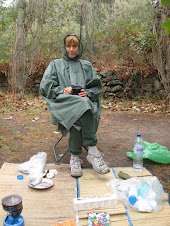
Thursday, December 4, 2008
Thanksgiving in Italy


Monday, November 24, 2008
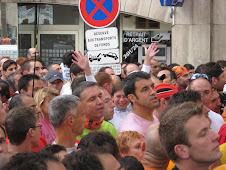
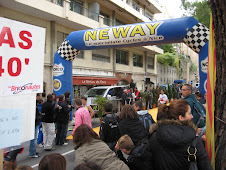
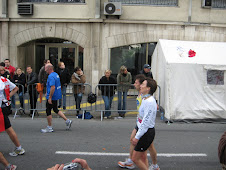
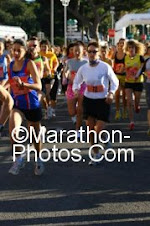
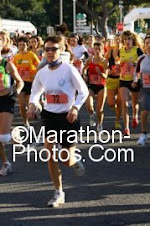
Courir en pays de Grasse 10 km
(“One club, one course, one city, one passion” – see you can read French!)
[Question to self: Is it over the top to shamelessly advertise athletic achievements on blog? Answer to self: It’s your blog, you can do whatever you want to!]
Ari's Race Results
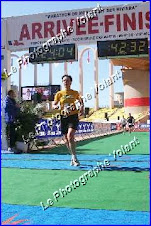
Champion Chip Finish Time: 42:12
(The Champion Chip is a small computer chip laced onto your shoe that tracks the actual time you cross the start line and finish line – it alleviates previous complaints from runners about the single race clock ---- still used in smaller races – not taking into account the several seconds – and possibly minutes – it takes those in the back of the pack to reach the starting line in a large race. The Chip eliminates the penalty of being a slow runner, or possibly one late to the race and unable to get in front of those slow runners who wiggled their way to front of line inappropriately.)
Overall Place: 379th of 1863 finishers (unfair: Nice-Matin newspaper only published first 150 finishers in today’s edition!)
Gender Place: 32nd Female (519 finishers)
Age Group Place: 11th of 207 (40-49 Veteran/Masters Female)
First Place Age Group Time: 37:36 (American races are more generous to those like me who can no longer compete against 40-somethings – or at least those 40-somethings on the opposite side of 45 – by creating categories in the 5’s; I typically do very well in the 45-49 age group!)
First Place Men’s Masters Age Group Time (for comparison): 31:10 (Men’s Master’s division is extraordinarily competitive! Happy not to be a man at my age – but then that was always the case, I think.)
First Place Men’s Masters Cash Award: 150 Euros (According to race promotional material, first time race awarded cash to Men’s Masters Division top 10 finishers)
First Place Women’s Masters Award: None (No explanation of why Masters Women were not given same honor. Although know for a fact that First Place Woman argued vehemently and received 70 Euros award. You go girl!)
First Place Age Group 50-59 (for comparison): 44:17 (If I were only four years older…not often one wishes that!)
Race Conditions:
Temperature at race time ~ 8 degrees Celsius (48 degrees Fahrenheit); overcast (Frigid! But decided to chuck running tights and go for shorts. Figured I was going to warm up. Unfortunately, Priscilla never did. But she was just standing and watching….)
Race Course:
Out and back (turn at 5K); gradual uphill to turnaround point (rise of 50 meters barely perceptible headed up but feeling of downhill acute on way back)
Race Clothing
Shorts, Barnard long sleeve t-shirt, green and blue bandanna around neck, silver and gold Live Strong Nike Air Pegasus
Race Port-o-Potties
Four. Cannot get over the fact that Europeans appear not to use bathrooms, or that, conversely, Americans overcompensate by providing bathrooms at every opportunity. In a race of a similar size in the US, there would have been a bank of at least 20 port-o-potties, or two banks of 20 in two different spots. Of four set up at this race; only two were open 45 minutes before the race, when a race official noticed (or was alerted) and unlocked other two. Amazing!
Number of Water Stops during Race
2 (at 3 km and 7 km) – Good. Only downside: plastic cups. It was the first time I have been handed a plastic cup in a race. Plastic cups break when you pinch them to create a small siphon to drink from (done to eliminate possibility of inhaling air instead of water), and lose all the water in them, which I discovered at first water stop. American race organizers use paper cups. I think they are more biodegradable. One demerit for the French.
Race Boosters
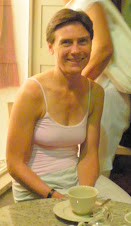
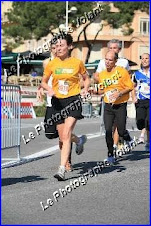
1 – Priscilla, wearing easy-to-find electric orange field cap, bearing digital camera for excellent race shots (and patiently waited throughout post-race awards ceremony to see if I would win anything, despite rapidly falling body temperature)
Race Booty:
--Two t-shirts, both outlandishly orange, one long-sleeve, one short sleeve (commemorative 10th anniversary T)
--Race Bandanna (in similarly outlandish orange) – sea of orange gave appearance of joviality to race…
--Bottle of no-label perfume (Grasse is the self-promoted Perfume Capital of France, but not sure why perfume maker not promoted…)
--Pen and Key Chain from race promoters
--Three cereal bars picked up from post-race spread
--No hardware; see race results above
Post-Race Spread
--Pound cake
--Raisin bread and other breads
--Sultanas (raisins) and Dried Apricots
--Pieces of chocolate (broken out bars on plastic plates)
--Orange slices (the universal post-athletic event fruit!)
--Orangina, Perrier (good French brands)
--Cereal Bars (no label brands, but good flavors – chocolate and banana, and apple and apricot)
(Similar to traditional American post-race spread, but missing bagels and bananas and endless plastic bottles of water – go Green France!)
Personal Bests
1 – Best 10km race time this year. Other race times: Capitol Hill Classic (18 May) 43:12 (12th woman, 1st 45-49) (flat with one large hill; humid, temps in the high 70s); Lawyers Have Heart 10K (16 June): 44:09 (40th woman, 5th Masters) (flat course, temps in high 70s)
Friday, November 21, 2008
Friday, November 21st - Reading Guide
Cheers,
Ari
Music, the universal language
Last Sunday, I attended the 10:15 a.m. service at the Protestant church in my neighborhood, hoping that I would run into a woman I had met there two weeks earlier. She and her husband had sat in front of me that Sunday, and I had heard her lovely voice, and we had exchanged friendly smiles during the Communion service, so I was hoping to speak with her after church. But after the service I had to endure lengthy small talk with some Americans visiting the church that morning before I had my chance to find her. She was standing by the table filled with juice and salty snacks (that’s a phrase I picked up here: “salty snacks” – I don’t think we ever use that phrase in the US. Must be some European marketing translation – or the English. Probably the English.) in the courtyard, and said hello.
[The French do not initiate conversations by introducing themselves; I’m not sure the origin of this, but the name disclosures come as an afterthought in most conversations I’ve had with people. Almost as if they are afraid to get personal unnecessarily. I might not have recognized this myself; I was given the heads up in a book I read about the French. The authors of that book tell the story of how they were wandering through a small town, and stopped to admire a lovely garden outside a home, and ended up conversing with the owner, who, after a time, invited them into his home, and after a time, invited them to stay for lunch, and, after a long afternoon at this home they left, never having learned the names of their host and hostess.]
She made a comment about my singing voice, and I returned the compliment. I disclosed, as I do in most conversations these days, that I am an American, and told her about my sojourn in Nice. I learned that her husband plays violin in the Philharmonic Orchestra here in Nice, and at the end of the conversation, at a moment when she wanted to introduce me to another church member walking by, did she finally ask me my name. And she introduced herself as well. But, all good intentions notwithstanding, I forgot her name as soon as I walked away from the church.
So, although I was looking for her in the service this particular Sunday, I was a little bummed I could not remember her name. I did not see this woman during the service, but I sat in the same approximate place that I had sat the Sunday I had met her. My experience in churches is that people find a place in the pews that they like, and they go back there every Sunday. (I can still see in my mind the spot where my friend Stewart and his wife, Gladys, sat at Western Presbyterian Church for 50 years. And the spots in the pews of where Richie and his wife sat, and where Kermit and the McKenzies sit.) Et voilà, the man I thought to be the woman’s husband sat down in front of me, several minutes into the service.
The service that Sunday was being conducted by a lay person in the church. There are three pastors in the church, two men and one woman; one of the men I like particularly, he speaks quite slowly and articulates, and I always understand a good part of his message. But today’s leader spoke quite quickly, making it more difficult for me to follow what he was trying to say. Happily for me, the service liturgy is set, and followed each week in a small booklet found in the hymnals; the hymns (“cantiques”) for each service are posted on the very familiar-looking plaques hanging on the walls on both sides at the front of the church.
I do not mind not understanding everything that is said during the service, simply being able to sing during the service is enough for me. It’s been fun to learn some new hymns, and to sing familiar hymns in a different language. I make an effort to match my pronunciation to the pronunciation of those around me; I really do want to sound French. [My experience in speaking with the French is that my pronunciation is very French-sounding; it is not unusual for people to ask me again, after I tell them I am American, You are American?] As a result, I listen fairly carefully to the people singing around me. And on this Sunday, the woman singing behind me was clearly a singer. She had a strong voice, and occasionally dropped down to sing the alto line. I turned around to see her; she was an older woman, sitting with her husband. Singing around another singer always emboldens me to sing stronger, which I probably did this Sunday as well.
After the service, the singer woman and her husband behind me moved forward two pews to engage in conversation with the man in front of me, the violinist, while I sat in the pew listening to the organ. It’s one of those things you do if you don’t want to have to get up and have to talk to people that are mingling after the service. Sit and appear to be listening and getting lost in the organ postlude, so that people don’t bother you and you can leave after they have all left the nave. This is a very friendly congregation, and they don’t have a regular after-church coffee hour (only after the communion service on the first Sunday of the month, it appears), so they do hang out in the nave for quite a while catching up after the service. And, therefore, not surprisingly, the organ postlude finished before the couple had finished talking at the end of my pew I got up and the woman looked toward me and reached out her hand to say hello, and, as happens frequently to me, complimented me on my singing. But she was even more direct; she immediately invited me to sing with a group that meets on Wednesday nights at the church.
Wow! Just what I had been looking for! In the past few months, I had looked around, and asked a few people, and they had confirmed in conversations that it was difficult to get into a chorus in the area. And I had been a bit deflated to learn that most churches don’t have choirs, although I had heard a choir perform at the All Saints Day (Toussaints) service I had attended at the cathedral in Old Nice. But I wasn’t really interested in attending a Catholic church every Sunday. The woman singer went on to describe that the group was very small, and that they sang gospel music (why Europeans insist on singing American gospel music, I have no idea, other than perhaps it’s kind of easy to learn – but that can’t be it, it’s not really that easy to learn!). She asked me my voice part, and I told her I was a soprano, and she got very excited, “We need good sopranos!” she exclaimed. She was quite happy to have found me, it seemed. I walked out into the courtyard with her and her husband, who, it turns out, is also a singer with the group. We ran into the violinist on the way, and she made to introduce me – and realized she didn’t know my name -- characteristically. So I introduced myself, and told the man that I believed I had met his wife a few weeks ago. And he confirmed yes, that was indeed true. So nice to be remembered! (At which point, I learned her name – Suzanne – and his, Pascal). And I learned the name of my new friend, Odette, and her husband, Philippe. Odette walked me over to the church office building, and showed me where the group rehearsed, muttered to herself about having to make copies of music for me, and asked me if I could read music. Oh, yes, I said. It looked like I had just confirmed something she had assumed. She wrote down her telephone numbers on a sheet of paper (with her name, happily, I’m sure I had forgotten it at that point), and I gave her mine, in case I had any questions. I told her I lived nearby; she said they would be happy to drive me home after the rehearsal on Wednesday. ALL of this conversation happening in FRENCH!
Wednesday evening arrived. I had planned my day so that I would be ready for the 8:30 evening rehearsal – a little different take on my regular days, where at 7:30 p.m. I am plopped down in front of my TV set for the next hour, relaxing, watching the news of the day. I ate early (don’t like to sing on a full stomach), and was getting ready around 8 when my portable rang. It was Odette, checking to make sure I was coming to the rehearsal. Yes, I said, I am coming. A tout à l’heure! She said. A tout à l’heure, I replied. (Loosely translated, See you then!)
I headed over to the church, a little late, so I ran a few blocks to make sure I would get there on time. I still don’t wear a watch (Eric – giver of watch – , I do plan to get a new battery in my Barnard watch one day, and take out one more link, so it actually fits me!), so I am a bit creative in ways I keep track of time. I have come to depend on the clocks in the Parking Ticket kiosks that line the sidewalks downtown for paid parking on the street. The kiosks are electronic (and of course, were unworkable during the blackout in the city a few weeks ago), and the time is shown on their face, so I can easily check the time when I start and end my runs, for example, on the kiosk a few yards from my building, or just check to make sure I am on time to an appointment as I walk.
I reached the church just as Odette and Philippe pulled into the church parking lot in their car. I went into the church office building with them; and we discovered that the church council was meeting (having a “reunion”) in our practice room. Apparently the council usually meets in the church, but for some reason this night the group was sitting in the conference room where we were to rehearse. So, after a bit of standing around, and other singers showing up and being introduced to me – with their names! – we found a key and went into the church for our rehearsal.
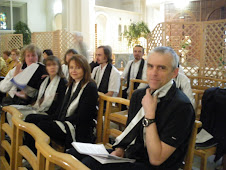
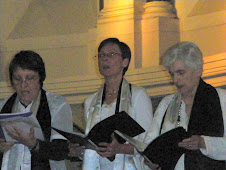
We probably started singing about 9 p.m. The scene was familiar to me, people chatting up, finding their music, the conductor (the “chef”) passing out new music, and finally, the group standing in a line in front of the conductor in our voice parts, beginning the rehearsal with some calisthenics and vocal exercises. The warm up was needed; the church was pretty chilly; most of the group wore their jackets throughout the evening (except the conductor, who insisted on wearing just his t-shirt – well, in addition to his pants).
There were four men, three basses and one tenor (the conductor filled in on the tenor part when we were all singing together). There were three altos, and I made the fourth soprano. The mix in ages seemed from mid-thirties, or possibly younger, to my new friends Odette and Philippe, who seemed to be in their late sixties. And basically, everyone was a singer and could read music pretty well, except for one bass, which meant that there was a lot of time spent wood-shedding notes (i.e., endless repetition with the intent of getting it into one’s brain) with the bass section.
The description Odette gave me of the group’s music was not far off: the first piece we practiced was “Go, Tell It on the Mountain.” And, amazingly, we practiced this for about an hour. They all seemed to pronounce the English pretty well, but the music was clearly not very familiar. I did some singing that was not on the written page, just from habit, for which I was corrected by the conductor. Oh ,well. But I was definitely enjoying singing with a small group, and happy to have found a friendly group of like-minded people here in France. Just when I had thought it was not possible!
We finished the rehearsal with “Lo, How a Rose ‘Ere Blooming,” the Praetorius chorale that I think one cannot have gone through church as a child and not memorized at some point. The conductor began by talking the group through the German text (“Es ist ein Rose entsprungen”), which was clearly unfamiliar to most of them (but I have sung a thousand times). It wasn’t until we started singing the piece, that someone said, “Oh, that is (French words used in the song – sorry don’t know them yet!)” and they realized that they all did know the piece.
We will sing the two pieces (and hopefully a few more) at the church service on December 14th. I’m not sure whether this group just got going, or has been doing this periodic performance gig for years. There was a conversation ongoing as we were gathering about how the pastor had asked that the group sing at a funeral service on Friday at noon. There was much going back and forth about what did he think? How would people be able to perform at noon? I got the feeling that, one, that they had never done such a thing, and two, the logistics of such a thing had never been considered. But, if the pastor is all of a sudden getting the idea to have the group sing at a funeral, I imagine this is may be a group just getting up and running. Just a musing on my part.
I had to tell my fellow singers that I would not be at the rehearsal next week, on account of the “fête Americain” of Thanksgiving, when I will be in Rome. They nodded understandingly. ALL conversation occurring in FRENCH!
So, now you know how happy I am that I can talk in French with other French people.
And, I’m singing too. Can it get any better than this?
Sure. I’ll let you know how my 10km race goes this weekend!
Musings on the Financial Crisis
I’ve been trying to look at the current situation from a regulatory standpoint, based on my four years as a enforcement attorney at the Securities and Exchange Commission, and from my ten years of consulting to the financial services industry, which included assisting many of my clients with regulatory compliance projects. My inside/outside perspective is not unique, but it allows me take a broader-based view than some of those currently writing about the crisis and proposing regulatory reform.
The more we learn about the contributing factors to the financial markets meltdown, the more the picture becomes murky. The fact that Fannie Mae and Freddie Mac took on subprime and Alt-A mortgages into their portfolios was not, as the government would like to have us think, the cause of the mortgage crisis. Fannie and Freddie were each performing their function as a government-sponsored entity (the former better than the latter, by all accounts, even in my biased opinion) and fulfilling their mission in providing a liquid market for mortgages. Those firms, taken over by the Feds in early September, have become bit players in the overall saga that has unfolded on Wall Street and around the world.
The housing bubble was growing throughout first half of this decade. As home prices began their steady and rapid rise, homes became less affordable to average Americans. So mortgage companies began to make available “affordable” mortgage products that would ease the traditional 20% down, fixed rate mortgage that had been the market norm. Adjustable rate mortgages, also a common product, were traditionally designed to take advantage of rising home prices, and were sold with the expectation that the homeowner would be able to refinance the home subsequently at a lower rate, once the price of the home had appreciated. But in the new environment, these loans were modified to make them more affordable, and hence, more risky, for the homebuyer. Subprime loans, which had been traditionally offered to homeowners seeking equity loans, became products for first lien mortgages in this effort to make homes “affordable” for first time homeowners. And in the frenzy of rising home prices, the marketing of homeownership as a right, and property ownership as a quick way to make a buck, caused ordinary Americans to behave irrationally, and ignore obvious risks, even as they were disclosed to them. There has been much discussion of fraud in the mortgage lending market, of which there certainly was some; in any time of rising fortunes, there are participants who greedily make plays for more than is legally allowed. But one can also listen to media interviews with homeowners since the bubble burst, who acknowledge that they entered into a home purchase not fully understanding what they were getting into, but understanding also that they were taking a risk bigger than they had ever taken before.
Studies by members of the Federal Reserve, as well as academics and practitioners, show that the mortgage products themselves did not cause the mortgage crisis. In fact, most of the products had been available for many years. But the manner in which they were used, and the type of buyer who took advantage of those products, coupled with sinking home prices, caused the default rate that presently rears its ugly head over the states of California, Florida, and Nevada, among others. The prepayments of mortgages, common with homeowners, for example, who took on fixed rate mortgages to buy a new home and then refinanced with a fixed rate mortgage, ceased once home prices started to fall. Unable to refinance, and unable to pay the newly adjusted mortgage payment, those home owners were the ones who were among the first to default on their loans.
Meanwhile, as home prices and the growth of mortgage backed securities grew, the market for collateralized debt obligations on non-agency bonds grew, and the credit derivative swaps market evolved. And blossomed, and burgeoned, and soon that market was dwarfing the market of the asset-backed securities on which the swaps were based. So, when housing prices began to fall, and mortgages began to default, the securities began to lose value, and the parties were forced to pay obligations (that most purchasers had never thought would come due, despite their own risk assessments), and found themselves losing money, and/or in the awkward situation that they had no idea how much money they had lost. While the traditional mortgage-backed CDS securities were carefully constructed for particular buyers, the non-agency subprime market in CDSs was new and the guidelines for triggers and defaults were based on guidelines for other types of corporate derivatives, not the unusual characteristics of the asset-backed securities of the credit derivatives swap market.
I’ve been doing some reading about the subprime debacle, to better understand how it impacts our current financial crisis. The book “Subprime Mortgage Credit Derivatives” (Wiley Press, 2008) reviews the credit derivatives market that grew using as collateral the loans issued in the non-agency mortgage market, that is, loans not written to specifications mandated by the GSEs, Fannie and Freddie. These are the loans that stretched the “affordability” standard discussed above. The authors argue that, based on their review of subprime mortgage loan data, and the performance those loans, specifically when reviewing the performance of the ABS CDO and CDS markets and the performance of the associated ABX and TABX indices, the subprime mortgage loans written in 2006 were “the worst ever created by man (except for 2007).” (page 303). The authors do a detailed analysis of these loans and their default rates, concluding: “The results of our tranche by tranche analysis are depressing from a credit standpoint. Subprime mortgage bonds and ABS CDOs are the biggest credit and risk management failure ever.” (page 291).
The authors hypothesize that the quality of the 2006 loans was affected by two factors. The first, that “the traditional relationship among FICO, Loan-to-Value, mortgage document type or doc type, debt to income ratios and defaults failed to hold for the 2006 book of business.” (page 303) The second argument they make for the deterioration in loan quality is stronger, based on their analysis of the data:
“The main culprit, in our opinion, is the unobserved underwriting variables and the extent to which originators were willing to push the envelope in underwriting these mortgages. In a booming housing market, loans leveraged to the hilt (CLTV > 100, low doc, purchase) are most prone to being underwritten with the loosest guidelines. But as housing turns, these loans will show the weakest performance. In such an environment, overreliance on FICO proves fatal, as it had become the last line of defense (and with loose underwriting, turned into a line of sand). So it is no surprise if many originators pushed the envelope on FICOs, (e.g., thinly filed FICOs, comingling of borrower and co-borrowers’ FICO and income). Such mortgages are also the most likely candidates for inflated appraisals. We suspect lenders loosened such secondary criteria as time on job, time in home, time since last bankruptcy, and so on, criteria that never makes [it] into a term sheet. In essence, loans with seemingly similar or even identical reported characteristics would perform very differently in this environment.” (page 70)
This further bolsters the argument that the mortgage companies that perpetuated the bubble by creating more and more risky loans was an act of complete irrationality.
Lack of regulatory oversight is an oft-quote phrase in the writings and press reports of the past month and year. But it has also been well documented how the opportunity to regulate certain products was bypassed by Congress, and efforts to coordinate the regulation of products between the SEC and the CFTC have stalled continually over the past decade. Hedge funds are the current target of the popular press and regulators, as fingers have pointed to these unregulated firms as the buyers of the CDS and other highly leveraged and risky products in the mortgage market. Certainly transparency in what they were doing, and where the bulk of their investments lay, could have given regulators a better sense of the overall derivatives markets, and an early warning of the ungainly size of the leverage of many of the firms. But the very nature of hedge funds is that they are private, and that their educated and wealthy investors agree to invest their funds for the expertise and risk that come with those firms.
I’m still doing some thinking about a regulatory approach. More to come.
Sunday, November 16, 2008
November Work Week
Back in Nice last week, I had to attend to several things, including planning my next trip (Rome), renewing my lease, working with my banker to get the pin code (lost in the US mail) that will allow me to start using my French credit card (and stop using my American ones!), and finding a doctor. All of these tasks required me to engage with the French, their unique French systems and their language. I continue to appreciate the help I receive from people, the patience of the French as I speak their language, and all the positive outcomes.
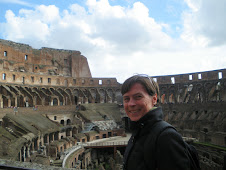
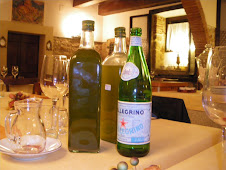
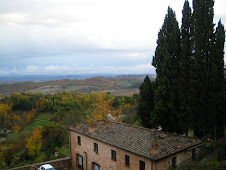
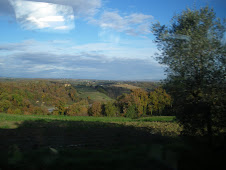
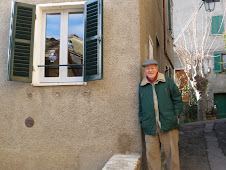
I will spend Thanksgiving with a friend from my Washington Western Presbyterian family, Don, who after many years of visiting Italy finally bought a small townhouse in a town about an hour’s train ride north of Rome. I will spend a few days with him, and then the weekend in Rome. I’ve signed up for a Runner’s Tour of Rome; hopefully they will get a few other runners signed up so that it actually happens. I’ve been offered a private tour for 200 Euros, alternatively. (I can make up a good run around Rome myself, I’m guessing, without paying that amount!)
As I have been working at keeping myself in shape, over the past several weeks I had been looking out for a road race in which I could participate here in France. While visiting Priscilla a few weeks ago in Grasse, I saw a poster advertising a 10 kilometer race in her town. I found the website and all the information, and realized, as I had learned when trying to enter a 10 km race while visiting Nice in April, that I would need a doctor’s certificate: a requirement for running road races here in France. So, after consulting with Priscilla, I had looked through the yellow pages and found a sports doctor who had an office just down the street from me. I called him and made an appointment, and saw him on Friday. HUGE difference between French medicine and American healthcare – well, first, socialized medicine, of course. Everyone is covered, so no big insurance concerns on the part of doctors. And so doctors can afford to do things pretty simply. My doctor was the one I talked to on the phone and with whom I made the appointment, it was he who buzzed me up into his building, answered the door, and asked me to wait until he was done with his other client. He ushered me into his office, took down my particulars onto his computer, conducted an exam on a table in his office, wrote my doctor’s note for the race, and then took 40 euros from me before ushering me to the door with his last little bit of advice regarding pre and post-race activity. No staff, no waiting, no forms to fill out, just the doctor! Amazing.
So, I am ready to race next weekend. Then I’ll be off to Italy on the train to celebrate Thanksgiving, and when I get back, it will be December! And time to return to the States for Christmas….where has the time gone?
Friday, November 7, 2008
Election - November 2008
I awoke spontaneously at just after 3 a.m. in France on November 5th, realized immediately that it was just after 9 p.m. in the States, and that there would be initial results reporting. I turned on my radio and listened for the next few hours to the French stations announcing the electoral college tally. Finally, at just after 5 a.m. my time, as requested, my mom called me with the news, that the election had been called for Obama. So incredibly exciting! I waited until after 6 a.m. to send a texto to Priscilla to give her the great news. "Beautiful" she wrote back. At that point, I was listening to Barack's speech from Grant Park on the BBC news. It was one of the first times I had heard him speak in real time (live), and it was a magnificent speech. Chills went up my spine. This was history in the making - as trite a phrase as that now is!
Credit goes too to John McCain, for a very eloquent and supportive concession speech. I hope he does decide to go back to the guy he was, and continue to work hard on behalf of the people in America.
I am proud to be an American in Europe now. As one British paper's headline said yesterday, "America just became a little cool again."













+of+IMG_0522.JPG)
+of+IMG_0505.JPG)
+of+IMG_0495.JPG)