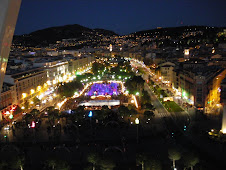
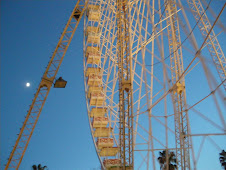
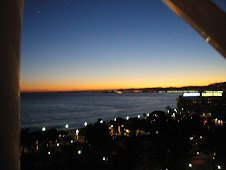
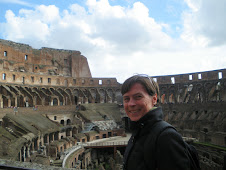
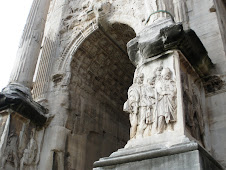
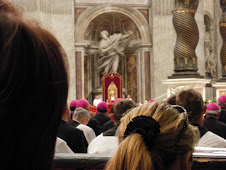
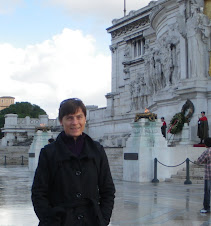
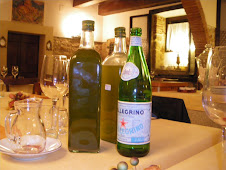
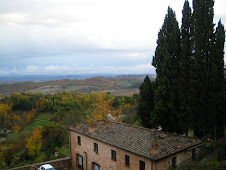
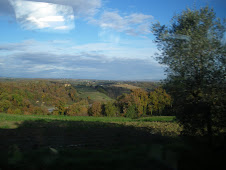
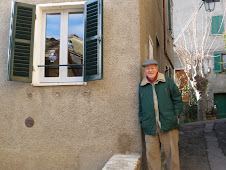
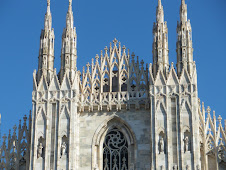
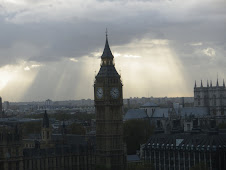
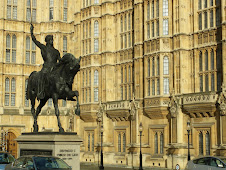
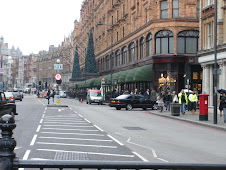
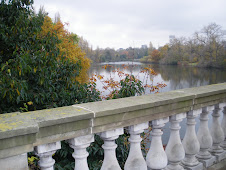
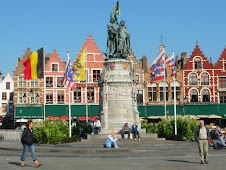
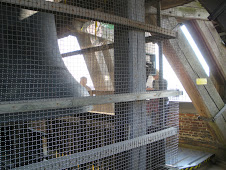
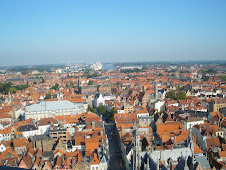
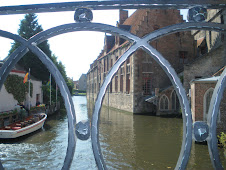
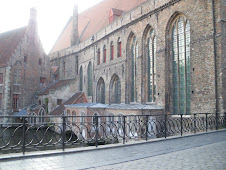
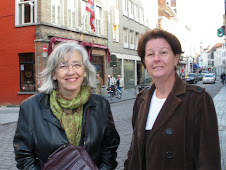
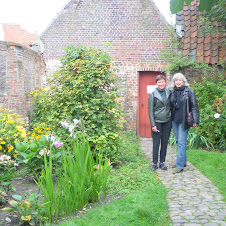
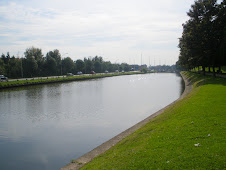
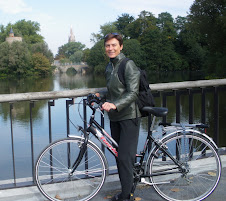
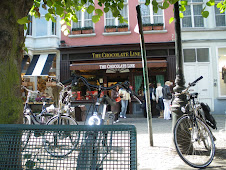
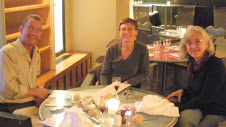
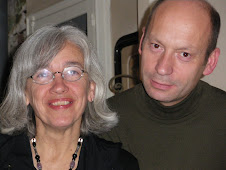
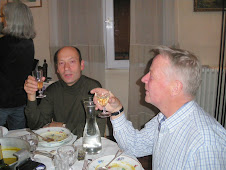
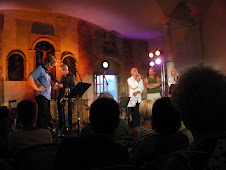
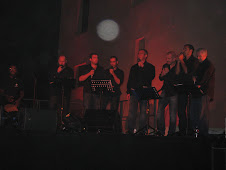
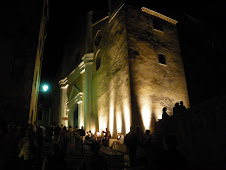
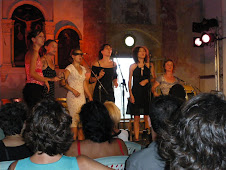
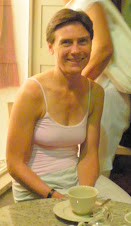
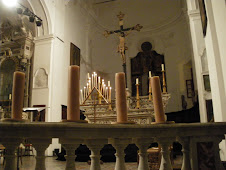
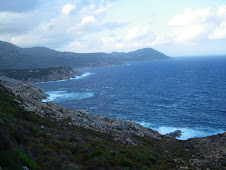
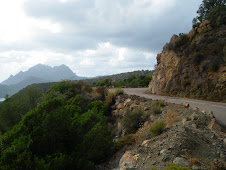
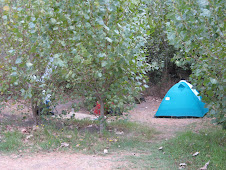
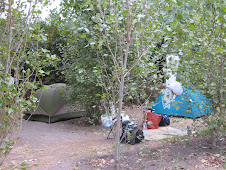
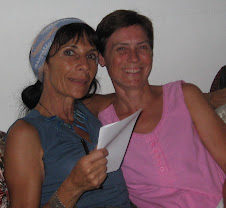
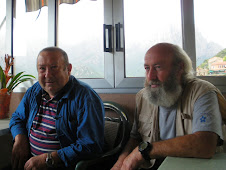
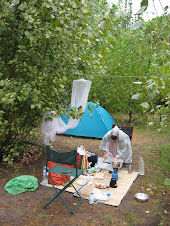
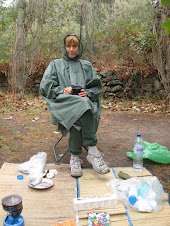
For those of you tracking such things, I have posted some pictures of my trip to Paris and Brugges to the right here, although I have not yet written up those fantastic five days.
I am back in Nice, and last night woke up from an early bed time (too early, I suppose) and wrote the posting below. I think it will give those of you who have been wondering what I do with myself all day a sense of that.
I am looking forward to seeing friends and family in NYC, Amherst and Boylston next week. But for now, enjoy!
Tuesday, September 23, 2008


Marking My Days (Or, Calendars, Surfing and Shopping)
My friend says that if you want to get something done, you need to have a calendar. Meaning, if you have a plan, you can track your progress against the plan, as all good project managers know. I was a bit obsessed with lists when I got to France, and indeed the lists focused me on getting those things done that I wanted to accomplish. Et voila! Here I am, after four weeks in France, with an apartment, a phone, a few trips under my belt, and a pretty good feel for my new city.
I’ve been encouraged by more than a few of you to let the lists go, which seemed like a good idea for a time – but my friend’s calendar comment came to me today. It would be so easy to just do nothing for the next several months, let the waves take me, as it were. But as most of you know, that’s not really me.
That being said, here’s a capsule of my lazy days so far in Nice. Wake up around 7 or 7:30 a.m., turn on Riviera Radio (FM 103.5) to listen to the Full English Breakfast show, broadcast from Monaco, and hear the latest business updates from the BBC. Get myself motivated and head out for a run on the Promenade des Anglais. It’s about a 5 minute run from my apartment to the beach, and I head west once I hit the Promenade – watching the waves and clouds and the planes taking off from the Nice Cote d’Azur airport as I run, and happy not to be part of the traffic clogging the roads as workers drive down the Promenade into Nice. It’s a flat out and back run (I’m already consulting city maps to find a hilly run for variety) and I’m back in 40 minutes or so. Back in the apartment, I shower (happy to have ended up in an apartment with good water pressure!), dress, make coffee and eat some breakfast – a granola bar, or perhaps yogurt and granola. Maybe watch a little French TV as I eat (the set came with the apartment), but have already found that French early morning shows are just as bad as American morning TV offerings.
Then I am free to do whatever I want. The one thing I plan to do every day (generally in the afternoon) is get on the Internet – at this point I am frequenting an internet café (which is a little misleading, as the store offers internet access and telephone service, with just a few candy bars for sale at the desk – it’s not really a café), not having committed yet to setting up internet service in my apartment. It costs me 2 € an hour, and today I purchased 10 hours for 19 €, finally committing myself to a place which is three blocks away from my home. I like the idea of having to go out for my Internet habit; I could easily sit in my apartment for hours and surf. The downside, of course, is that I am accessing my personal sites from a public place, but I do my best to protect myself, and habitually erase the cookies and temporary files from the computer before I leave it each time. It also keeps me from having to worry about viruses and such on my own computer at home. So far, the USB Memory Stick is serving me well for easing communication with all of you.
Shopping is my other almost-daily scheduled event. I love food shopping, and being able to explore new stores, and thousands of new products on the shelves, means I have endless opportunities to expand my knowledge of French and European food offerings. And improve my French, of course. My first instinct was to look for American products in French supermarkets, but I quickly found that this is pretty much a waste of time. So, I look for products that I like and see if I can find something that makes sense given my options. Yogurt, for example. First of all, the French (all Europeans?) have an obsession about yogurt, it seems. There are complete aisles of yogurt offerings, in different sizes, in different flavors, bio (organic), for babies, for kids, for women. Priscilla tells me it has to do with the French obsession with their digestive tracts. For me, it has more to do with calcium consumption. But a good digestive tract is not to be laughed at! I was able to find plain yogurt (Nature), but skim milk yogurt (écreme) was a harder thing to figure out. I finally decided that part-skim would be fine, unable to figure out exactly what was listed in the little information box on the side of the container.
My favorite stoned wheat crackers are AWOL in the aisles of my French supermarkets (namely the neighborhood Casino, upscale Monoprix, and mammoth Carrefour stores, so far). There are plenty of regular American-type crackers with all their hydrogenated oils and salt, but I’m down to Wasa crackers to satisfy my attempts to avert yeast-filled products. An aversion which, I have decided, while quite easy to achieve in the US, doesn’t make sense here in France. For heaven’s sake, there is a boulangerie (bread store) on every block, practically (and in every town and every city – really). French people buy a baguette EVERY DAY. What’s the point of being in France if I’m not going to participate in this daily practice (tradition)? Actually, I have learned that while families may buy a baguette (or several) every day, they do not necessarily eat it all each day. In all the homes I have been in, baguettes sliced in half (and half again) can be found in the freezer, and are offered up for breakfast, toasted. It appears that their freezers have special drawers for this purpose. Go figure.
So, I am now a baguette eater. Actually, I have started experimenting with different breads from different stores. I have tried a tomato and cheese loaf here in Nice, a sliced paver au berger in Paris, and am looking next for an olive loaf. I also now have a baguette (sliced in half) in my freezer. And I am thinking I should start frequenting the store around the corner from me, to build up a relationship with my local baker. You never know. Call me a convert.
Coffee has been easy. I admit, I have not been trying out espressos in my local café (although I have had my share of them over here), but I make coffee in the Italian coffee maker my proprietor left in my apartment. I heat my milk and froth it with the small electric spinner I brought from the States, for my own café au lait, which they call écreme here (which doesn’t make sense to me, given that the skim milk is called ecreme, but there are lots of French words that are the same with different meanings in different contexts…not unlike English).
Cheese is my other staple. And of course, here I am in heaven. The local stores have tons of cheeses, and the specialty stores have even more. I just have to get over my timidity in trying new varieties. But I’ll get over that. My favorite new cheese so far is the Corsican cheese, but you can only have that in small doses (a very smelly cheese). I put a very green Roquefort cheese on my spinach salad tonight; you don’t get mold like that in the States!
Chocolate is my other indulgence. This is the land of great chocolate – actually it’s hard to find bad chocolate on the Continent. Having just come back from Belgium, the land of excellent chocolate, with a 250 gram box of dark chocolates, I am rationing…but there are just as many great bars of dark chocolate to choose from in the supermarket around the corner.
Hmm, bread, cheese, chocolate, coffee, (oh, yes, and wine). What else do I need to be happy each day? Rhetorical question.
Back to my lazy days.
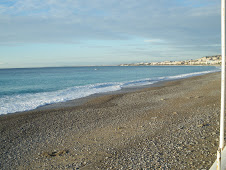
A favorite activity back a few weeks (before the Corsica and Paris/Brugges trips), was hanging out on the Nice beach in the late afternoon. I’d bring my bright yellow towel (purchased at Carrefour), my iPod shuffle, and newly purchased sunscreen, lie down on the pebbly beach in my black and white bikini, lather on lotion, plug music in my ears (not too loud), and enjoy the sound of the ocean waves, the sun, and the murmurs of the French, Italian and Germans enjoying the end of their summers. I also would swim a bit, if the sea was not too crazy. The weather hasn’t been as luscious as it was in early September, so lately I have been buying the International Herald Tribune and walking down to the beach in the late afternoon to read the paper on the Promenade benches, listen to the waves and watch the people.
So, back to the calendar.
I’m thinking that I have a limited time for all this laziness. I’m thinking that at some point I will need to get a job again (a lot later than I was originally thinking, if my budgeting holds). I’m thinking (and realizing) that it is easy to do nothing, and that time will simply drift by – and then my time will be up, and I will not have done anything that I wanted to do. This matters to me, because there are things I want to do!
After four weeks, I am restless. Taking a nap during the day is a pretty relaxing thing to do. I think I am getting relaxed. I haven’t achieved a consistent 8 hours of sleep each night yet, but that was nearly impossible when I was sleeping on the ground in a tent in Corsica or sharing a bed in Paris. Maybe this week (although it is midnight and I went to bed at 9 tonight, and got up at 11 pm to write this)…
I found my calendar in my briefcase this morning. October is around the corner. It will be June before I know it. Time to make a plan.
I’ve been encouraged by more than a few of you to let the lists go, which seemed like a good idea for a time – but my friend’s calendar comment came to me today. It would be so easy to just do nothing for the next several months, let the waves take me, as it were. But as most of you know, that’s not really me.
That being said, here’s a capsule of my lazy days so far in Nice. Wake up around 7 or 7:30 a.m., turn on Riviera Radio (FM 103.5) to listen to the Full English Breakfast show, broadcast from Monaco, and hear the latest business updates from the BBC. Get myself motivated and head out for a run on the Promenade des Anglais. It’s about a 5 minute run from my apartment to the beach, and I head west once I hit the Promenade – watching the waves and clouds and the planes taking off from the Nice Cote d’Azur airport as I run, and happy not to be part of the traffic clogging the roads as workers drive down the Promenade into Nice. It’s a flat out and back run (I’m already consulting city maps to find a hilly run for variety) and I’m back in 40 minutes or so. Back in the apartment, I shower (happy to have ended up in an apartment with good water pressure!), dress, make coffee and eat some breakfast – a granola bar, or perhaps yogurt and granola. Maybe watch a little French TV as I eat (the set came with the apartment), but have already found that French early morning shows are just as bad as American morning TV offerings.
Then I am free to do whatever I want. The one thing I plan to do every day (generally in the afternoon) is get on the Internet – at this point I am frequenting an internet café (which is a little misleading, as the store offers internet access and telephone service, with just a few candy bars for sale at the desk – it’s not really a café), not having committed yet to setting up internet service in my apartment. It costs me 2 € an hour, and today I purchased 10 hours for 19 €, finally committing myself to a place which is three blocks away from my home. I like the idea of having to go out for my Internet habit; I could easily sit in my apartment for hours and surf. The downside, of course, is that I am accessing my personal sites from a public place, but I do my best to protect myself, and habitually erase the cookies and temporary files from the computer before I leave it each time. It also keeps me from having to worry about viruses and such on my own computer at home. So far, the USB Memory Stick is serving me well for easing communication with all of you.
Shopping is my other almost-daily scheduled event. I love food shopping, and being able to explore new stores, and thousands of new products on the shelves, means I have endless opportunities to expand my knowledge of French and European food offerings. And improve my French, of course. My first instinct was to look for American products in French supermarkets, but I quickly found that this is pretty much a waste of time. So, I look for products that I like and see if I can find something that makes sense given my options. Yogurt, for example. First of all, the French (all Europeans?) have an obsession about yogurt, it seems. There are complete aisles of yogurt offerings, in different sizes, in different flavors, bio (organic), for babies, for kids, for women. Priscilla tells me it has to do with the French obsession with their digestive tracts. For me, it has more to do with calcium consumption. But a good digestive tract is not to be laughed at! I was able to find plain yogurt (Nature), but skim milk yogurt (écreme) was a harder thing to figure out. I finally decided that part-skim would be fine, unable to figure out exactly what was listed in the little information box on the side of the container.
My favorite stoned wheat crackers are AWOL in the aisles of my French supermarkets (namely the neighborhood Casino, upscale Monoprix, and mammoth Carrefour stores, so far). There are plenty of regular American-type crackers with all their hydrogenated oils and salt, but I’m down to Wasa crackers to satisfy my attempts to avert yeast-filled products. An aversion which, I have decided, while quite easy to achieve in the US, doesn’t make sense here in France. For heaven’s sake, there is a boulangerie (bread store) on every block, practically (and in every town and every city – really). French people buy a baguette EVERY DAY. What’s the point of being in France if I’m not going to participate in this daily practice (tradition)? Actually, I have learned that while families may buy a baguette (or several) every day, they do not necessarily eat it all each day. In all the homes I have been in, baguettes sliced in half (and half again) can be found in the freezer, and are offered up for breakfast, toasted. It appears that their freezers have special drawers for this purpose. Go figure.
So, I am now a baguette eater. Actually, I have started experimenting with different breads from different stores. I have tried a tomato and cheese loaf here in Nice, a sliced paver au berger in Paris, and am looking next for an olive loaf. I also now have a baguette (sliced in half) in my freezer. And I am thinking I should start frequenting the store around the corner from me, to build up a relationship with my local baker. You never know. Call me a convert.
Coffee has been easy. I admit, I have not been trying out espressos in my local café (although I have had my share of them over here), but I make coffee in the Italian coffee maker my proprietor left in my apartment. I heat my milk and froth it with the small electric spinner I brought from the States, for my own café au lait, which they call écreme here (which doesn’t make sense to me, given that the skim milk is called ecreme, but there are lots of French words that are the same with different meanings in different contexts…not unlike English).
Cheese is my other staple. And of course, here I am in heaven. The local stores have tons of cheeses, and the specialty stores have even more. I just have to get over my timidity in trying new varieties. But I’ll get over that. My favorite new cheese so far is the Corsican cheese, but you can only have that in small doses (a very smelly cheese). I put a very green Roquefort cheese on my spinach salad tonight; you don’t get mold like that in the States!
Chocolate is my other indulgence. This is the land of great chocolate – actually it’s hard to find bad chocolate on the Continent. Having just come back from Belgium, the land of excellent chocolate, with a 250 gram box of dark chocolates, I am rationing…but there are just as many great bars of dark chocolate to choose from in the supermarket around the corner.
Hmm, bread, cheese, chocolate, coffee, (oh, yes, and wine). What else do I need to be happy each day? Rhetorical question.
Back to my lazy days.
A favorite activity back a few weeks (before the Corsica and Paris/Brugges trips), was hanging out on the Nice beach in the late afternoon. I’d bring my bright yellow towel (purchased at Carrefour), my iPod shuffle, and newly purchased sunscreen, lie down on the pebbly beach in my black and white bikini, lather on lotion, plug music in my ears (not too loud), and enjoy the sound of the ocean waves, the sun, and the murmurs of the French, Italian and Germans enjoying the end of their summers. I also would swim a bit, if the sea was not too crazy. The weather hasn’t been as luscious as it was in early September, so lately I have been buying the International Herald Tribune and walking down to the beach in the late afternoon to read the paper on the Promenade benches, listen to the waves and watch the people.
So, back to the calendar.
I’m thinking that I have a limited time for all this laziness. I’m thinking that at some point I will need to get a job again (a lot later than I was originally thinking, if my budgeting holds). I’m thinking (and realizing) that it is easy to do nothing, and that time will simply drift by – and then my time will be up, and I will not have done anything that I wanted to do. This matters to me, because there are things I want to do!
After four weeks, I am restless. Taking a nap during the day is a pretty relaxing thing to do. I think I am getting relaxed. I haven’t achieved a consistent 8 hours of sleep each night yet, but that was nearly impossible when I was sleeping on the ground in a tent in Corsica or sharing a bed in Paris. Maybe this week (although it is midnight and I went to bed at 9 tonight, and got up at 11 pm to write this)…
I found my calendar in my briefcase this morning. October is around the corner. It will be June before I know it. Time to make a plan.
Sunday, September 21, 2008
XXth Recontres de Chants Polyphoniques - Calvi, Corsica
When Priscilla invited me to join her for the polyphonic chant festival in Corsica, she did so with a measure of intent. For, as she says, she would not share this particular music with just anyone. Knowing that I sing in choruses, and have heard and enjoyed the Corsican music that she has shared with me, she felt comfortable introducing this “recontres” (translated literally, “meeting,” but we would say “festival” probably). This was the 20th year of the festival, but that does not mean it has matured into some sleekly run event with big name sponsors and recording labels. The sponsoring group is the 10-voice Corsican group, A Filetta, which has a solid musical reputation on the island. The eight concerts – two each evening, one at 6:00 and one at 9:30 – were staffed largely (as usual) by local volunteers recruited by A Filetta, which led to some pretty interesting organizational decisions during the four days of music. But more on that later.
The festival opened on September 9th with a concert in another Corsican town, Bastia, apparently an effort to broaden the reach of the event beyond Calvi, which sits on the island’s northern coast. Calvi’s location makes it easy to reach by ferry from the mainland (France or Italy), but it is fairly distant (a few hours drive) from the other towns on the island. The Tuesday night concert featured A Filetta and an Italian performer, Daniele di Bonaventura, on an accordion-like instrument called the “bandonéon.” We heard Daniele on the final night of the festival, in a round-up of the week’s musicians. Apparently he is an incredibly accomplished musician, but Priscilla and I both thought his appearance on this particular bill was, well, interesting. It was not the first time we had had this reaction to a performer.
We purchased a subscription for the whole week of performances, and learned that this would give us preferred seating in the concert venues. In each instance, we made an effort to sit as close as possible to the performers; as Priscilla pointed out, this allowed one to fully view their facial expressions and hear what they were singing. For this type of music, that mattered. A note on concert organization here: As subscribers, we were given a sturdy “bracelet” to wear on our wrists for the duration of the festival (mine made it through several swims, runs and showers), which was ostensibly to make it easier for the concert staff to know who was to be let in the door and shown to the reserved seats (at each concert, 5x7 sheets printed with the word “Abonnés” - “subscribers”- were taped to the first several rows of seats). In practice, although we were waved into the concert venues once we showed our bracelets, we were also expected to take a serrated ticket from a staff member, which was then split and one half collected, apparently to keep count of how many of the subscribers actually attended. This mystified us, and although we didn’t take note of this particular practice, at one point we were gratified to have picked up tickets as we entered through a gate on our way to a venue, because those subscribers at the door to the church who hadn’t done so, were told to return to the gate to get a ticket. A cause for great confusion, and more than a few disgruntled subscribers!
The first concert in Calvi was advertised as “Chants de Bretagne et d’Occitanie” – regions in France known to us Anglos as Brittany and Provence. Pris and I arrived just as the concert was about to start that night – we had decided to have dinner at our campsite before the 6 p.m. concert, and somehow the plan to arrive early so as to get seats up front was delayed by a lovely pesto pasta and fresh salad. That being said, when we showed our tickets at the door that evening, we were escorted up to the front of the crowded Oratoire, and shown seats on the side benches that afforded us a pretty decent view of the performers, Yann Fañch Kemener (Bretagne) and Renat Sette (Provence). The two men were accompanied by two other musicians, who played period saxophones, oboes and clarinets. They each sang in their native tongue; all the French regions appear to have some type of dialect, and the singers, like the other performers that followed that week, including the Corsicans, through their music keep that language alive. Many of the songs this night sounded like the medieval songs that we are familiar with in the States played at Renaissance festivals and by “early music” groups. In one amusing selection, Yann and Renat performed a familiar song, reminiscent of “The Twelve Days of Christmas,” about biblical prophets and characters, in counterpoint, singing the verses alternately each in their native tongue. The audience loved it.
After the program, one of the concert staff joined the musicians on stage and engaged them in a discussion of their music. This “talk-back” session, as we are wont to call them in the States, occurred at each 6 p.m. performance subsequently. Designed to be more casual and, to my mind, as a way to introduce these lesser known stars to the audience, the question and answer sessions at the 6 p.m. performances were generally engaging and did indeed give the singers a chance to connect with the audience in a different way, and explain what they were doing on stage. In some instances the discussions were quite lengthy, depending on the audience interest and/or its unfamiliarity with the group.
The 9:30 concert that first evening was held in the much larger Cathédrale in the center of the Citadelle in Calvi. The advertised performers were “Les Voix de Géorgie,” or The Voices of Georgia. Pris and I sat in the third row center (she had jostled for the seats with another subscriber, as I had taken some time to walk through downtown Calvi between performances), with a great view of the stage. We were the lucky ones; the staff scrounged for seats for the huge audience, delaying the start of the show until nearly 9:45 p.m. When a group of men dressed in black came onstage and began to sing, I was impressed, thinking these were the men of Georgia. After a few songs, one of the men spoke in French, and I thought, wow, pretty cosmopolitan of them. And then they left the stage, and a huge group of big guys all dressed up in (what I would recognize as) Russian coats and boots, with swords hanging from belts on their wide girths, walked in – then I realized that I had just heard A Filetta, who I had forgotten sing a few songs as part of each evening’s late performance. But the Georgians were great big voices that reminded me of the Tchaikowsky and other Russian composers’ choral pieces that I have sung. The crowd loved them, and I thought that the recent crisis in Georgia probably magnified the support of the audience. At the end of the very late night, A Filetta joined the Georgians on stage to sing a Corsican song with them, and the applause went on long and loud afterward. We didn’t get back to our campsite until after midnight that night – which meant that we had to park at the front of the campground (no cars allowed after 11 p.m.) and walk back to our tents – but in the light of the waxing moon, it was a nice way to wind down the evening.
The Day Two six p.m. program was headlined by a local Corsican group called Tavagna. Due to the group’s and the music’s popularity, this concert was held in the Cathédrale instead of the smaller Oratoire. We once again had our dinner before the concert, and arrived just before the concert began, but were able to find seats up front on the right hand side of the nave, which also allowed us to stretch out our legs (the seats in the nave generally were very close to each other!). Tavagna is a group like A Filetta and Alte Voce (see earlier blog post), men who sing the traditional Corsican polyphony. Each group has its own signature sound and repertoire, but in this performance, Priscilla and I both wondered what this was for Tavagna. Their performance, while professional, was listless and uninspired. Afterward, I resolved to buy an Alte Voce CD (not a Tavagna disc), deciding that the spirit and inspiration that I heard in FanFan and Jean’s music a few weeks earlier made up for any stray disharmonies in their performance. There was a short talk-back session during the concert, but clearly the audience here was experiencing what we were, and there was no prolonged effort to get them to perform encores.
Priscilla and I had tea and coffee, respectively, at a small café across from the Cathédrale between performances, specifically situating ourselves near the front of the line to go into the cathedral for the 9:30 show. Actually, we had left some clothing to reserve our seats in the front row after the 6 p.m. concert, and hoped that the scrum would not disregard our attempt to mark our spaces! Indeed, the Cathédrale filled up for the 9:30 show. The program this night featured two groups performing music from the same office of the Latin Mass – the Tenebrae service from Holy Week. The altar was set up with a candelabra and candles on the railing, as it would be for the service of Light. The brothers from the Confrérie Sant’Antone abate (abbey) in Calvi began by singing the traditional Latin chant and polyphony of the service. The music had a familiar sound to me, having sung many masses in my choral literature. Afterwards, A Filetta performed a few songs of a sacred nature (I am guessing, given the tone of the evening). Then the second featured group appeared on stage: Doulce Mémoire, to perform “Leçons de Ténèbres” by Cristobal Morales (1500-1553). There were seven singers and five musicians who played various long, flute-like instruments that looked like bass recorders to me (one of them dwarfed the short, slight woman playing it). The music was mesmerizing and performed flawlessly, with smooth stage moves as the singers and musicians alternated places and the leader slowly doused the candles on the railing throughout the service. The audience tried to maintain a respectful silence, but it was a very long performance, and a good number of the crowd left (conspicuously) midway through the service. When the last candle was snuffed out, and the clanging of the steel indicated that the service was over, the audience stood and applauded its praise for this amazing group. But, given the late hour – almost midnight – the crowd did not prolong its enthusiasm.
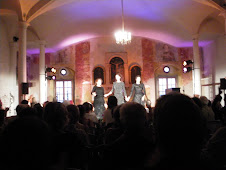
Friday’s 6 p.m. performance in the Oratoire was by a women’s group called La Mal Coiffée (The Bad Hair, literally). The six women reminded me of the a capella women’s groups I have seen; each of them were dressed a little differently, in counter to the all-black garb of the men’s groups we had already seen. They sang in Occitane (Provencal), and, like the other groups, are working to preserve the songs of their heritage in southwest France. Pris and I arrive a bit late for this show, but are still able to get bench seats not too far from the stage. The talk-back during the performance is engaging, as the women are quite animated and clearly enjoy themselves on stage. But this is the shortest program of the week; we learn they have just released their first CD, and my guess is that they are just beginning to develop the polish of a professional group. The copious drinking of water from water bottles on stage between songs is yet another sign to me that this is a group not quite ready for prime-time.
As we leave the 6 p.m. show, there is a question from the audience about where the 9:30 show will be held; the skies are threatening outside, and there is a stiff wind that we could hear throughout the women’s performance. We are told that it will be held in the Cathédrale; Pris and I for the first time return to our campsite between shows, as we had spent the day on the road visiting Rosanna in Corte. We decided to get a pizza at the campsite café before we return for the evening performance; literally in minutes after ordering, our thin (and I mean thin) crust pizza arrived with its mushrooms and olives. Consumed quickly, we head back to town for the next show.
We drive back to the Citadelle by 8:30 and join a line of folks waiting to get, it appears, onto the Place d’Armes, an open air plaza in the center of the citadel, which has been prepared with a stage, lighting and amplifiers. When the line is finally allowed into the Place, we learn that we subscribers should go to the Oratoire and the rest of the paying audience will sit in the Cathédrale, it having been decided that the weather is too iffy for an outdoors show. The idea is that the performers will move between venues. That sounds crazy to us (although the approach works fine the following evening). And indeed, around 9:30, after we watch a group of techies take microphones off the stage, we learn that the decision has been made to have the show on the plaza after all, and we all move as quickly as possible to the open air site. The wind is whipping around, but there is no rain, and the full moon is rising in the east. It’s actually quite a magical evening, if you ignore the physical jockeying for prime seating in front of the stage, the general grumping amongst the subscribers about the concert staff and their inability to make decisions and make us happy, and the dropping temperature as the wind grows in velocity (remember, we are sitting in the highest point of this part of the island!).
The featured Friday night performer is a musician from Ile de la Réunion (Reunion Island), Danyel Waro. The aging, draft-dodger hippie with dreadlocks is backed up by a band of percussionists who look like rock stars – good looking guys who have that casual stance that says “I know I am cool.” The four backup guys are excellent musicians, but both Pris and I are ready to leave after about 30 minutes of the music; it definitely does not do anything for either of us. The sound is an island, rhythmic, sound, and A Filetta backs up the band with vocals on a few of the songs, which is far afield from their Corsican polyphony, but they are clearly enjoying boogeying to the drums – and a few of them literally are dancing on stage. The crowd, mostly the concert staff, we note, are gyrating to the beat in front of the stage as well. Again, not our thing, and we get up and leave the venue around 11:30 (I guess we listened for longer than 30 minutes).
Saturday is the last day of the festival, and Pris and I spend most of Saturday driving down and back up the west coast of the island to see her friends in Ota. We have a great time with the family, and so leave a little later than planned, but Pris gets me to the 6:00 p.m. concert that night so I can hear the other female group, Norn lod: “when three sorceresses of the North invent a language.” The three women in long black dresses move fluidly together in choreographed movements and sing hauntingly in a language that I certainly don’t understand; the extended question and answer period afterward makes it clear to me that the audience is also intrigued and somewhat dumbfounded about what they are hearing and seeing. But the audience is also appreciative, and gives the group solid and sustained applause after the show.
Priscilla joins me for the final show of the evening; as advertised, we will see all the participants from the week for reprise performances. But our assumption that that the evening will include all singers from the eight performances is wrong; only the 9:30 p.m.-featured groups are listed on the program. This evening, due to threatening rainstorms, the staff ably separates the crowd, seating the subscribers in the Oratoire and the other concert-goers in the Cathédrale. We sit in the third row, across the aisle from each other, which makes whispering during the performance a little awkward – which is what I try to do when the first performer comes on stage and begins to sing. It is another aging crooner, singing what sounds like Parisian love songs. Turns out that Gabriel Yacoub built a reputation in the 70’s by singing the songs of the French, when everyone else at that time was performing American music. He was backed up by four brass players; the arrangements for them were not challenging, but the music was pretty, and very much a change from polyphony we had heard just a few nights ago.
The rest of our program includes a reprise of the not so compelling Danyel Waro with his cute rhythm guys; Daniele, the accordion guy we hadn’t heard before (and wondered why we were hearing him now); A Filetta (to rousing applause); and finally, the Georgians, to even greater applause as we hear again their very limited repertoire. The A Filetta leader gives a short speech before they sing, thanking the audience for being there, for their tolerance of the shortcomings of the concert organization (without naming specifically the concert staff), and for helping to continue the tradition of polyphony here in Corsica and around the world. It was a satiating evening of music, capping off for me, an intriguing and ear-opening four days of music in Corsica.
[apologies for my inability to decide to write in past tense or present tense...]
The festival opened on September 9th with a concert in another Corsican town, Bastia, apparently an effort to broaden the reach of the event beyond Calvi, which sits on the island’s northern coast. Calvi’s location makes it easy to reach by ferry from the mainland (France or Italy), but it is fairly distant (a few hours drive) from the other towns on the island. The Tuesday night concert featured A Filetta and an Italian performer, Daniele di Bonaventura, on an accordion-like instrument called the “bandonéon.” We heard Daniele on the final night of the festival, in a round-up of the week’s musicians. Apparently he is an incredibly accomplished musician, but Priscilla and I both thought his appearance on this particular bill was, well, interesting. It was not the first time we had had this reaction to a performer.
We purchased a subscription for the whole week of performances, and learned that this would give us preferred seating in the concert venues. In each instance, we made an effort to sit as close as possible to the performers; as Priscilla pointed out, this allowed one to fully view their facial expressions and hear what they were singing. For this type of music, that mattered. A note on concert organization here: As subscribers, we were given a sturdy “bracelet” to wear on our wrists for the duration of the festival (mine made it through several swims, runs and showers), which was ostensibly to make it easier for the concert staff to know who was to be let in the door and shown to the reserved seats (at each concert, 5x7 sheets printed with the word “Abonnés” - “subscribers”- were taped to the first several rows of seats). In practice, although we were waved into the concert venues once we showed our bracelets, we were also expected to take a serrated ticket from a staff member, which was then split and one half collected, apparently to keep count of how many of the subscribers actually attended. This mystified us, and although we didn’t take note of this particular practice, at one point we were gratified to have picked up tickets as we entered through a gate on our way to a venue, because those subscribers at the door to the church who hadn’t done so, were told to return to the gate to get a ticket. A cause for great confusion, and more than a few disgruntled subscribers!
The first concert in Calvi was advertised as “Chants de Bretagne et d’Occitanie” – regions in France known to us Anglos as Brittany and Provence. Pris and I arrived just as the concert was about to start that night – we had decided to have dinner at our campsite before the 6 p.m. concert, and somehow the plan to arrive early so as to get seats up front was delayed by a lovely pesto pasta and fresh salad. That being said, when we showed our tickets at the door that evening, we were escorted up to the front of the crowded Oratoire, and shown seats on the side benches that afforded us a pretty decent view of the performers, Yann Fañch Kemener (Bretagne) and Renat Sette (Provence). The two men were accompanied by two other musicians, who played period saxophones, oboes and clarinets. They each sang in their native tongue; all the French regions appear to have some type of dialect, and the singers, like the other performers that followed that week, including the Corsicans, through their music keep that language alive. Many of the songs this night sounded like the medieval songs that we are familiar with in the States played at Renaissance festivals and by “early music” groups. In one amusing selection, Yann and Renat performed a familiar song, reminiscent of “The Twelve Days of Christmas,” about biblical prophets and characters, in counterpoint, singing the verses alternately each in their native tongue. The audience loved it.
After the program, one of the concert staff joined the musicians on stage and engaged them in a discussion of their music. This “talk-back” session, as we are wont to call them in the States, occurred at each 6 p.m. performance subsequently. Designed to be more casual and, to my mind, as a way to introduce these lesser known stars to the audience, the question and answer sessions at the 6 p.m. performances were generally engaging and did indeed give the singers a chance to connect with the audience in a different way, and explain what they were doing on stage. In some instances the discussions were quite lengthy, depending on the audience interest and/or its unfamiliarity with the group.
The 9:30 concert that first evening was held in the much larger Cathédrale in the center of the Citadelle in Calvi. The advertised performers were “Les Voix de Géorgie,” or The Voices of Georgia. Pris and I sat in the third row center (she had jostled for the seats with another subscriber, as I had taken some time to walk through downtown Calvi between performances), with a great view of the stage. We were the lucky ones; the staff scrounged for seats for the huge audience, delaying the start of the show until nearly 9:45 p.m. When a group of men dressed in black came onstage and began to sing, I was impressed, thinking these were the men of Georgia. After a few songs, one of the men spoke in French, and I thought, wow, pretty cosmopolitan of them. And then they left the stage, and a huge group of big guys all dressed up in (what I would recognize as) Russian coats and boots, with swords hanging from belts on their wide girths, walked in – then I realized that I had just heard A Filetta, who I had forgotten sing a few songs as part of each evening’s late performance. But the Georgians were great big voices that reminded me of the Tchaikowsky and other Russian composers’ choral pieces that I have sung. The crowd loved them, and I thought that the recent crisis in Georgia probably magnified the support of the audience. At the end of the very late night, A Filetta joined the Georgians on stage to sing a Corsican song with them, and the applause went on long and loud afterward. We didn’t get back to our campsite until after midnight that night – which meant that we had to park at the front of the campground (no cars allowed after 11 p.m.) and walk back to our tents – but in the light of the waxing moon, it was a nice way to wind down the evening.
The Day Two six p.m. program was headlined by a local Corsican group called Tavagna. Due to the group’s and the music’s popularity, this concert was held in the Cathédrale instead of the smaller Oratoire. We once again had our dinner before the concert, and arrived just before the concert began, but were able to find seats up front on the right hand side of the nave, which also allowed us to stretch out our legs (the seats in the nave generally were very close to each other!). Tavagna is a group like A Filetta and Alte Voce (see earlier blog post), men who sing the traditional Corsican polyphony. Each group has its own signature sound and repertoire, but in this performance, Priscilla and I both wondered what this was for Tavagna. Their performance, while professional, was listless and uninspired. Afterward, I resolved to buy an Alte Voce CD (not a Tavagna disc), deciding that the spirit and inspiration that I heard in FanFan and Jean’s music a few weeks earlier made up for any stray disharmonies in their performance. There was a short talk-back session during the concert, but clearly the audience here was experiencing what we were, and there was no prolonged effort to get them to perform encores.
Priscilla and I had tea and coffee, respectively, at a small café across from the Cathédrale between performances, specifically situating ourselves near the front of the line to go into the cathedral for the 9:30 show. Actually, we had left some clothing to reserve our seats in the front row after the 6 p.m. concert, and hoped that the scrum would not disregard our attempt to mark our spaces! Indeed, the Cathédrale filled up for the 9:30 show. The program this night featured two groups performing music from the same office of the Latin Mass – the Tenebrae service from Holy Week. The altar was set up with a candelabra and candles on the railing, as it would be for the service of Light. The brothers from the Confrérie Sant’Antone abate (abbey) in Calvi began by singing the traditional Latin chant and polyphony of the service. The music had a familiar sound to me, having sung many masses in my choral literature. Afterwards, A Filetta performed a few songs of a sacred nature (I am guessing, given the tone of the evening). Then the second featured group appeared on stage: Doulce Mémoire, to perform “Leçons de Ténèbres” by Cristobal Morales (1500-1553). There were seven singers and five musicians who played various long, flute-like instruments that looked like bass recorders to me (one of them dwarfed the short, slight woman playing it). The music was mesmerizing and performed flawlessly, with smooth stage moves as the singers and musicians alternated places and the leader slowly doused the candles on the railing throughout the service. The audience tried to maintain a respectful silence, but it was a very long performance, and a good number of the crowd left (conspicuously) midway through the service. When the last candle was snuffed out, and the clanging of the steel indicated that the service was over, the audience stood and applauded its praise for this amazing group. But, given the late hour – almost midnight – the crowd did not prolong its enthusiasm.
Friday’s 6 p.m. performance in the Oratoire was by a women’s group called La Mal Coiffée (The Bad Hair, literally). The six women reminded me of the a capella women’s groups I have seen; each of them were dressed a little differently, in counter to the all-black garb of the men’s groups we had already seen. They sang in Occitane (Provencal), and, like the other groups, are working to preserve the songs of their heritage in southwest France. Pris and I arrive a bit late for this show, but are still able to get bench seats not too far from the stage. The talk-back during the performance is engaging, as the women are quite animated and clearly enjoy themselves on stage. But this is the shortest program of the week; we learn they have just released their first CD, and my guess is that they are just beginning to develop the polish of a professional group. The copious drinking of water from water bottles on stage between songs is yet another sign to me that this is a group not quite ready for prime-time.
As we leave the 6 p.m. show, there is a question from the audience about where the 9:30 show will be held; the skies are threatening outside, and there is a stiff wind that we could hear throughout the women’s performance. We are told that it will be held in the Cathédrale; Pris and I for the first time return to our campsite between shows, as we had spent the day on the road visiting Rosanna in Corte. We decided to get a pizza at the campsite café before we return for the evening performance; literally in minutes after ordering, our thin (and I mean thin) crust pizza arrived with its mushrooms and olives. Consumed quickly, we head back to town for the next show.
We drive back to the Citadelle by 8:30 and join a line of folks waiting to get, it appears, onto the Place d’Armes, an open air plaza in the center of the citadel, which has been prepared with a stage, lighting and amplifiers. When the line is finally allowed into the Place, we learn that we subscribers should go to the Oratoire and the rest of the paying audience will sit in the Cathédrale, it having been decided that the weather is too iffy for an outdoors show. The idea is that the performers will move between venues. That sounds crazy to us (although the approach works fine the following evening). And indeed, around 9:30, after we watch a group of techies take microphones off the stage, we learn that the decision has been made to have the show on the plaza after all, and we all move as quickly as possible to the open air site. The wind is whipping around, but there is no rain, and the full moon is rising in the east. It’s actually quite a magical evening, if you ignore the physical jockeying for prime seating in front of the stage, the general grumping amongst the subscribers about the concert staff and their inability to make decisions and make us happy, and the dropping temperature as the wind grows in velocity (remember, we are sitting in the highest point of this part of the island!).
The featured Friday night performer is a musician from Ile de la Réunion (Reunion Island), Danyel Waro. The aging, draft-dodger hippie with dreadlocks is backed up by a band of percussionists who look like rock stars – good looking guys who have that casual stance that says “I know I am cool.” The four backup guys are excellent musicians, but both Pris and I are ready to leave after about 30 minutes of the music; it definitely does not do anything for either of us. The sound is an island, rhythmic, sound, and A Filetta backs up the band with vocals on a few of the songs, which is far afield from their Corsican polyphony, but they are clearly enjoying boogeying to the drums – and a few of them literally are dancing on stage. The crowd, mostly the concert staff, we note, are gyrating to the beat in front of the stage as well. Again, not our thing, and we get up and leave the venue around 11:30 (I guess we listened for longer than 30 minutes).
Saturday is the last day of the festival, and Pris and I spend most of Saturday driving down and back up the west coast of the island to see her friends in Ota. We have a great time with the family, and so leave a little later than planned, but Pris gets me to the 6:00 p.m. concert that night so I can hear the other female group, Norn lod: “when three sorceresses of the North invent a language.” The three women in long black dresses move fluidly together in choreographed movements and sing hauntingly in a language that I certainly don’t understand; the extended question and answer period afterward makes it clear to me that the audience is also intrigued and somewhat dumbfounded about what they are hearing and seeing. But the audience is also appreciative, and gives the group solid and sustained applause after the show.
Priscilla joins me for the final show of the evening; as advertised, we will see all the participants from the week for reprise performances. But our assumption that that the evening will include all singers from the eight performances is wrong; only the 9:30 p.m.-featured groups are listed on the program. This evening, due to threatening rainstorms, the staff ably separates the crowd, seating the subscribers in the Oratoire and the other concert-goers in the Cathédrale. We sit in the third row, across the aisle from each other, which makes whispering during the performance a little awkward – which is what I try to do when the first performer comes on stage and begins to sing. It is another aging crooner, singing what sounds like Parisian love songs. Turns out that Gabriel Yacoub built a reputation in the 70’s by singing the songs of the French, when everyone else at that time was performing American music. He was backed up by four brass players; the arrangements for them were not challenging, but the music was pretty, and very much a change from polyphony we had heard just a few nights ago.
The rest of our program includes a reprise of the not so compelling Danyel Waro with his cute rhythm guys; Daniele, the accordion guy we hadn’t heard before (and wondered why we were hearing him now); A Filetta (to rousing applause); and finally, the Georgians, to even greater applause as we hear again their very limited repertoire. The A Filetta leader gives a short speech before they sing, thanking the audience for being there, for their tolerance of the shortcomings of the concert organization (without naming specifically the concert staff), and for helping to continue the tradition of polyphony here in Corsica and around the world. It was a satiating evening of music, capping off for me, an intriguing and ear-opening four days of music in Corsica.
[apologies for my inability to decide to write in past tense or present tense...]
Tuesday, September 16, 2008
Corsica: History, People and Food
Corsica, as it is known to Corsicans, is a beautiful, rugged, island off the coasts of France and Italy in the Mediterranean. For many years it was dominated by the Italians, and specifically, the Genoese. Ancient Genoese towers can be found around the island, positioned on the coasts to protect the towns inland. Many of the towns, really, small villages, sat atop citadels where the island’s inhabitants could look out for marauding Barbary pirates or whoever else was on their way to plunder or takeover the island. A proud people and never happy with the occupancy of another country, it wasn’t until a man named Pascal Paoli united his countrymen in the mid-1700’s that Corsica enjoyed several years of independence. Paoli was an extraordinarily enlightened man, whose constitution for his native island was largely copied by our nation’s founders as they were establishing their new nation. But Corsica was a much desired territory, and the French came across the Mediterranean to seize the island. Paoli and his armies fought bravely, but were largely overmatched by the French. In the final decisive battle in Ponte Novu, there are stories of the river running red with the blood of the Corsicans as thousands died for the cause. The French call the island Corse, and have called it theirs since. But the Corsicans have not forgotten their taste of independence, and to this day, agitate to get it back. The movement for independence flies under its own flag and the group supports activities as mundane as the blacking out of French names on road signs (Corsican names are also listed) and as violent as the firebombing of official French buildings.
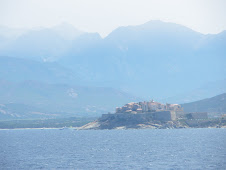
My knowledge of the island comes from the Lonely Planet guide to Corsica, as well as from my guide, Priscilla, who has steeped herself in the lore, from our drives across the island and from those Corsicans I met on our trip. The first citadel (Citadelle) we saw was that of Calvi, in whose town we would spend our six days. Perched high atop the rock, from the citadel you can see the open sea, the harbor and the coast for several kilometers. The cathedral in the center of the citadel was the location for many of the concerts we attended during the week. On our fourth day on the island, we drove from Calvi east to Ile de Rousse, and then south through the countryside on our way to Corte, for a short time the capital of Corsica. The ride through the mountains was beautiful, with small enclaves of homes and farms few and far between on this harsh land. At one time in its history, Corsica was heavily farmed and provided the Genoese with much agricultural produce. But overtime, the land became tired, and today the island is more known for its cheese than its produce. Cows can be seen grazing on the hillsides and often, dangerously for motorists, wandering on the small winding roads.
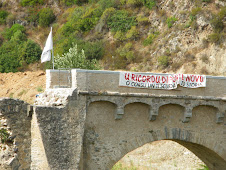
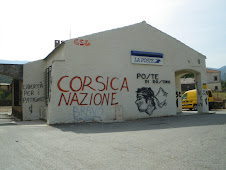
We took a small detour on our trip to Corte to visit Ponte Novu, the scene of the decisive battle between the Corsicans and the French. The site has been renovated as a monument to that battle, and the broken bridge stands as a testament to that fight for freedom. Graffiti on a nearby post office illustrated how that the fight continues today.
A lunch stop in the town of Merusaglia, Pascal Paoli’s birthplace, showed to me again how the Corsicans are an amazing people. This incredibly inspired man grew up in a tiny hillside village perched overlooking the valley below. A visit on our fifth day to the village (pop. 200) of Ota was another example of the generosity and amiability of the Corsicans. Ota is actually the county seat, a few short kilometers from the seaside town of Porto (pop. 300). Porto is a tourist destination (the island now is largely dependent on tourists for income) and its population swells during the summer, but the small village of Ota is clearly just that, home to its inhabitants. In Ota, we had a leisurely lunch with a family in which Priscilla has become an adopted member. Over a lunch of fattiglia, salad nicoise, pasta and cheese, we talked about music, politics, the weather, and family news. Afterward Antoine took us to meet Andre, another family member, in the café down the hill for an espresso and more catching up, as we looked across the mountains and watched another rainfall come and go.
Our trip to Corte on day four was to see Rosanna, the female member of the Alte Voce singing group. A vibrant and intense woman, she served us cranberry juice cocktail and her cookies as she listened to us tell of our musical moments at the festival and she shared her own stories of the political situation in Corsica (Sarkozy’s political influence is felt even on this island), neighborhood news and her family updates. I was touched during our visit because she spoke to me in French and listened as I tried to express myself to her in French as well. Priscilla's "family" was equally as patient with me. Priscilla has been learning Corsican, and tried her new language during our visits as well, to great approval from her listeners. Rosanna engaged me through a culinary discussion, in which I gave her the recipe for chocolate chip cookies and she gave me the recipe for the traditional Canistrelli sugar cookies that she makes regularly (but she cautioned would not come out as desired in my electric oven!).
On our trip to Ota, I picked up some traditional Corsican cheese, known for its rich taste and pungent smell, and some Corsican wine from a local grocery. Each region of Corsica makes its own wine, and while it is not widely distributed, it is eminently drinkable. I was able to taste both the cheese and wine over our lunch with Williams and Françoise and their extended family.
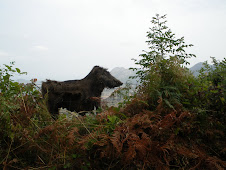
Other gastronomy specific to Corsica includes the fattiglia sausage, which is made from wild boars who graze on the chestnuts in the woods, and has a very intense taste. Chestnut trees are all over the island, and it is a traditional activity for families to go into the woods in the fall to harvest the chestnuts, which are used for their nuts as well as ground into chestnut flour. I tasted a chestnut cake one evening at a local café while we were waiting for our next concert to start – the flavor, as Priscilla likes to say, is like bacon fat. The cake was quite tasty! During our cheese course at lunch that day, we were also treated to a homemade marmalade of watermelon and walnuts, made by Williams' mother, Nicole. Priscilla was so complementary (and it was a lovely combination), that we both were given jars to take home with us. I found in my fridge here in my apartment an incredible jar of marmalade made from Corsican clementines, which Priscilla tells me is also an island specialty. Priscilla also brought me a gift of almonds (both fresh and roasted) harvested from the countryside, after her trek to the desert on the northern coast.
Corsica is an island with a complicated history, wonderful food, and engaging and spirited people. And a rich musical heritage too. More on that in the next posting.
My knowledge of the island comes from the Lonely Planet guide to Corsica, as well as from my guide, Priscilla, who has steeped herself in the lore, from our drives across the island and from those Corsicans I met on our trip. The first citadel (Citadelle) we saw was that of Calvi, in whose town we would spend our six days. Perched high atop the rock, from the citadel you can see the open sea, the harbor and the coast for several kilometers. The cathedral in the center of the citadel was the location for many of the concerts we attended during the week. On our fourth day on the island, we drove from Calvi east to Ile de Rousse, and then south through the countryside on our way to Corte, for a short time the capital of Corsica. The ride through the mountains was beautiful, with small enclaves of homes and farms few and far between on this harsh land. At one time in its history, Corsica was heavily farmed and provided the Genoese with much agricultural produce. But overtime, the land became tired, and today the island is more known for its cheese than its produce. Cows can be seen grazing on the hillsides and often, dangerously for motorists, wandering on the small winding roads.
We took a small detour on our trip to Corte to visit Ponte Novu, the scene of the decisive battle between the Corsicans and the French. The site has been renovated as a monument to that battle, and the broken bridge stands as a testament to that fight for freedom. Graffiti on a nearby post office illustrated how that the fight continues today.
A lunch stop in the town of Merusaglia, Pascal Paoli’s birthplace, showed to me again how the Corsicans are an amazing people. This incredibly inspired man grew up in a tiny hillside village perched overlooking the valley below. A visit on our fifth day to the village (pop. 200) of Ota was another example of the generosity and amiability of the Corsicans. Ota is actually the county seat, a few short kilometers from the seaside town of Porto (pop. 300). Porto is a tourist destination (the island now is largely dependent on tourists for income) and its population swells during the summer, but the small village of Ota is clearly just that, home to its inhabitants. In Ota, we had a leisurely lunch with a family in which Priscilla has become an adopted member. Over a lunch of fattiglia, salad nicoise, pasta and cheese, we talked about music, politics, the weather, and family news. Afterward Antoine took us to meet Andre, another family member, in the café down the hill for an espresso and more catching up, as we looked across the mountains and watched another rainfall come and go.
Our trip to Corte on day four was to see Rosanna, the female member of the Alte Voce singing group. A vibrant and intense woman, she served us cranberry juice cocktail and her cookies as she listened to us tell of our musical moments at the festival and she shared her own stories of the political situation in Corsica (Sarkozy’s political influence is felt even on this island), neighborhood news and her family updates. I was touched during our visit because she spoke to me in French and listened as I tried to express myself to her in French as well. Priscilla's "family" was equally as patient with me. Priscilla has been learning Corsican, and tried her new language during our visits as well, to great approval from her listeners. Rosanna engaged me through a culinary discussion, in which I gave her the recipe for chocolate chip cookies and she gave me the recipe for the traditional Canistrelli sugar cookies that she makes regularly (but she cautioned would not come out as desired in my electric oven!).
On our trip to Ota, I picked up some traditional Corsican cheese, known for its rich taste and pungent smell, and some Corsican wine from a local grocery. Each region of Corsica makes its own wine, and while it is not widely distributed, it is eminently drinkable. I was able to taste both the cheese and wine over our lunch with Williams and Françoise and their extended family.
Other gastronomy specific to Corsica includes the fattiglia sausage, which is made from wild boars who graze on the chestnuts in the woods, and has a very intense taste. Chestnut trees are all over the island, and it is a traditional activity for families to go into the woods in the fall to harvest the chestnuts, which are used for their nuts as well as ground into chestnut flour. I tasted a chestnut cake one evening at a local café while we were waiting for our next concert to start – the flavor, as Priscilla likes to say, is like bacon fat. The cake was quite tasty! During our cheese course at lunch that day, we were also treated to a homemade marmalade of watermelon and walnuts, made by Williams' mother, Nicole. Priscilla was so complementary (and it was a lovely combination), that we both were given jars to take home with us. I found in my fridge here in my apartment an incredible jar of marmalade made from Corsican clementines, which Priscilla tells me is also an island specialty. Priscilla also brought me a gift of almonds (both fresh and roasted) harvested from the countryside, after her trek to the desert on the northern coast.
Corsica is an island with a complicated history, wonderful food, and engaging and spirited people. And a rich musical heritage too. More on that in the next posting.
Monday, September 8, 2008
Settling In
It is Monday, Day 4 in my new apartment. It is the day that the US Government is putting Fannie Mae into receivership. It is also the day before I leave for six days of camping and music in Corsica. Today marks the end of the second week since I arrived in France. Amazing. My world spins on an axis that is hard for even me to comprehend sometimes. For the record, I’m not sleeping soundly quite yet. For those keeping track, I’m getting tired of my lists. For me to truly relax, I think I need to get rid of the lists.
Spending a few hours on the beach in the late afternoon, just lying there in the sun, listening to the pounding waves, the chatter of children, and the noises on the Promenade, is good for me. It’s a time to not think and plan and organize. I listen music on my iPod Shuffle sometimes. Sometimes not. I have set up several playlists; I’m getting a little sophisticated with this new toy. I actually have time to play with my toy – and figure out things like playlists!
I moved into my new apartment on Friday afternoon, after a whirlwind walkthrough with Martina. Actually, she was pretty thorough, but you know the French, the way they do things just sounds like a whirlwind. All that chatter. Martina and I fell into using a mix of French and English; it worked for us. My big mistake was not to have her show me how to use the washing machine and the stove. Well, I think she thought she had showed me the stove, but let’s just say that at the moment I am glad that there is one electric burner on the stove range, in addition to the three gas burners. Haven’t determined at the moment whether the gas is really on. But at least I can make coffee in the morning.
After Martina and I had finished that afternoon, I called Christiana to have her drive down to my place with my things. We had loaded the car earlier that morning, as I had gone off at noon to meet Priscilla for lunch down at the old port, where she was teaching an English class to a bunch of ship captains (turns out they need to know English too!). The walkthrough was at 2:30; I called Christiane around 3:30. She appeared about 15 minutes later; she couldn’t find a place to park, so we just unloaded my things: my big red roller bag, my black duffel, my new pillow, the box that I had sent over, and a bag of food items. She gave me a hug; we made plans to meet the next evening to go to a fair in the old port, and then she was gone.
So, there I was, in my own place, barely two weeks after having arrived in Nice. The first thing I wanted to do was to figure out bedding. Turns out fully furnished meant everything but sheets and towels, and frankly, once you think about using someone else’s bedding and towels…having to get my own made complete sense. I had a few small towels that would get me through a day with no problem, but the bed seemed a little more complicated. There was a cover on the bed, but I really needed something over me. I can sleep on almost anything, but I don’t really sleep well without something covering me. Even in the hottest of summer nights, I sleep with a sheet on top of me. Anyway, in the big closet in the bedroom, I found another bed covering that appeared to be for one of the extra beds – light but substantive enough to make me sleep easy. It would work.
I made a small dinner with some of the food I brought with me and some that I had bought at the local supermarket after figuring out the bed scheme: some cheese and crackers, some of the tapenade I had bought for my picnic lunch with Priscilla, and a Corona beer that the owner had left in the fridge. The owner is Italian, and lives in his apartment during the months of July and August, like a good European. He dresses well, based on the number of Prada clothes hangers in the closet, and has a pretty good sense of art and color (or is wealthy enough to pay someone to decorate the place). He must have a number of folks come visit him during the summer, because the living room has beds for three people (a sofa with a trundle bed, and a separate single foldout bed that doubles as a large stool). He left behind a number of crackers and cans of tomatoes in the cupboards (he has the same obsession with fiber that most Europeans do based on the cracker and cookie selection) and a number of nice fruit jellies and spreads in the refridgerator. I figured the Corona was a gimmee, and the boxes of crackers all have “consume by” dates, so Martina told me to eat them.
After dinner, I decided that it would be good to wash some of my things. While at the Casino supermarket earlier that evening, I had called Priscilla, needing some immediate guidance on what product I should be buying that would be laundry detergent. I was in the aisle of the store, trying to figure out – along with my dictionary – what the products were in front of me. They had various pictures, but not a lot of language that made it clear to me that they were for clothes! Priscilla told me to look for two name brands, neither of which was to be found in the shelves in front of me. I wondered if they were just out of it? Hard to believe (but Priscilla tells me later, this is not uncommon. Stocking so that the shelves always have what the consumer wants is not the highest priority for most supermarkets, is her experience). I finally buy something that has a baby on it, clutching a towel. At least I know it is for towels, I say to myself. At worst, it will make my clothes smell nice, Priscilla texts me on my way home.
So, I am standing in front of the clothes washer (machine a laver), trying to understand what “Programme” I should use on the dial. It’s a small appliance, with a front loading door. An American family with a machine of this size would never stop doing laundry, it’s so small. I have figured out the “demi” button – this will be a half load (I did a load earlier in the week, and frankly, I don’t have that many clothes with me here). The “arête/marche” button is self explanatory. Finally, I choose a “programme” – they are numbered sequentially on a dial from 1 to 15, with 1 though 6 as one “programme”, 7 – 12 next and then 13-15. I decide for some reason to start the dial on 7. It is 7:30 p.m.
I pour liquid in the tray for the soap, even though I am pretty convinced at this point that I have bought fabric softener. I push the “marche” button and the machine begins to percolate, and fill with water. Soon it has begun its swish-swish-swish, followed by seconds of silence, and then a counter swish-swish-swish. This activity goes on for some time. I putter around the place, putting my things away, watching a little French TV on my television (I think I get the traditional five stations – shown on 10 different channels). I had done my wash at Christiane’s after a week; I learned that her machine took almost two hours (!!) to complete its cycle. So I was expecting this machine to be similar; let’s say I knew not to expect that it would be complete in 30 minutes, like my machine in my condo.
By 8:30, I am wondering if the machine will ever go into spin, it looks at this point like I have used the programme for Gentles/Delicates. The machine finally stops. I turn it off. I wait for the door to unlock. I reach in. The clothes are WET! Ackkkk! This is not what I want. No way am I wringing clothes. I resolve to get these clothes spun dry. I click through the Programmes, and see that the first series has a character that may indicate a rinse and spin. I am optimistic. I set the dial, and start the machine again.
It’s 9:30 p.m. I actually saw the machine go through a spin cycle! But then it filled with water again. And started swishing again. I’ve been putting in quite a bit of time in the small galley kitchen, watching this machine do its thing. At one point, I get very nervous that the machine is filling with water, and I may have to get the water out myself. The idea of opening the machine filled with water fills me with dread; I look through the pots and pans in the cupboards over the sink to see if one will fit under the washing machine door and catch water, if necessary. I find a cake pan that will suffice. I walk away, hoping that my anxiety will have been for nought.
It’s 10 p.m., I’m exhausted; it’s been a long day, and this washing machine will not stop. At least it doesn’t look like it will overflow any longer. I am lying down on my bed; hoping that this nightmare will be over soon. At 10:15, the machine stops again. I turn the knob to the last programme available; this HAS to work. I lie down again on my bed and try to fall asleep.
11:30 p.m. I awake from a very light sleep – the apartment is quiet. I lie there for a moment. Should I go see what happened to the machine? Do I want to know? Should I just deal with it in the morning? Can my mind actually fall asleep if I don’t know? What if it’s still filled with water? What will I do?
I get up and go into the kitchen. I turn off the machine and open the door. The clothes have SPUN! Big sigh. I will hang them up to dry in the morning. At least now I can get some sleep.
Spending a few hours on the beach in the late afternoon, just lying there in the sun, listening to the pounding waves, the chatter of children, and the noises on the Promenade, is good for me. It’s a time to not think and plan and organize. I listen music on my iPod Shuffle sometimes. Sometimes not. I have set up several playlists; I’m getting a little sophisticated with this new toy. I actually have time to play with my toy – and figure out things like playlists!
I moved into my new apartment on Friday afternoon, after a whirlwind walkthrough with Martina. Actually, she was pretty thorough, but you know the French, the way they do things just sounds like a whirlwind. All that chatter. Martina and I fell into using a mix of French and English; it worked for us. My big mistake was not to have her show me how to use the washing machine and the stove. Well, I think she thought she had showed me the stove, but let’s just say that at the moment I am glad that there is one electric burner on the stove range, in addition to the three gas burners. Haven’t determined at the moment whether the gas is really on. But at least I can make coffee in the morning.
After Martina and I had finished that afternoon, I called Christiana to have her drive down to my place with my things. We had loaded the car earlier that morning, as I had gone off at noon to meet Priscilla for lunch down at the old port, where she was teaching an English class to a bunch of ship captains (turns out they need to know English too!). The walkthrough was at 2:30; I called Christiane around 3:30. She appeared about 15 minutes later; she couldn’t find a place to park, so we just unloaded my things: my big red roller bag, my black duffel, my new pillow, the box that I had sent over, and a bag of food items. She gave me a hug; we made plans to meet the next evening to go to a fair in the old port, and then she was gone.
So, there I was, in my own place, barely two weeks after having arrived in Nice. The first thing I wanted to do was to figure out bedding. Turns out fully furnished meant everything but sheets and towels, and frankly, once you think about using someone else’s bedding and towels…having to get my own made complete sense. I had a few small towels that would get me through a day with no problem, but the bed seemed a little more complicated. There was a cover on the bed, but I really needed something over me. I can sleep on almost anything, but I don’t really sleep well without something covering me. Even in the hottest of summer nights, I sleep with a sheet on top of me. Anyway, in the big closet in the bedroom, I found another bed covering that appeared to be for one of the extra beds – light but substantive enough to make me sleep easy. It would work.
I made a small dinner with some of the food I brought with me and some that I had bought at the local supermarket after figuring out the bed scheme: some cheese and crackers, some of the tapenade I had bought for my picnic lunch with Priscilla, and a Corona beer that the owner had left in the fridge. The owner is Italian, and lives in his apartment during the months of July and August, like a good European. He dresses well, based on the number of Prada clothes hangers in the closet, and has a pretty good sense of art and color (or is wealthy enough to pay someone to decorate the place). He must have a number of folks come visit him during the summer, because the living room has beds for three people (a sofa with a trundle bed, and a separate single foldout bed that doubles as a large stool). He left behind a number of crackers and cans of tomatoes in the cupboards (he has the same obsession with fiber that most Europeans do based on the cracker and cookie selection) and a number of nice fruit jellies and spreads in the refridgerator. I figured the Corona was a gimmee, and the boxes of crackers all have “consume by” dates, so Martina told me to eat them.
After dinner, I decided that it would be good to wash some of my things. While at the Casino supermarket earlier that evening, I had called Priscilla, needing some immediate guidance on what product I should be buying that would be laundry detergent. I was in the aisle of the store, trying to figure out – along with my dictionary – what the products were in front of me. They had various pictures, but not a lot of language that made it clear to me that they were for clothes! Priscilla told me to look for two name brands, neither of which was to be found in the shelves in front of me. I wondered if they were just out of it? Hard to believe (but Priscilla tells me later, this is not uncommon. Stocking so that the shelves always have what the consumer wants is not the highest priority for most supermarkets, is her experience). I finally buy something that has a baby on it, clutching a towel. At least I know it is for towels, I say to myself. At worst, it will make my clothes smell nice, Priscilla texts me on my way home.
So, I am standing in front of the clothes washer (machine a laver), trying to understand what “Programme” I should use on the dial. It’s a small appliance, with a front loading door. An American family with a machine of this size would never stop doing laundry, it’s so small. I have figured out the “demi” button – this will be a half load (I did a load earlier in the week, and frankly, I don’t have that many clothes with me here). The “arête/marche” button is self explanatory. Finally, I choose a “programme” – they are numbered sequentially on a dial from 1 to 15, with 1 though 6 as one “programme”, 7 – 12 next and then 13-15. I decide for some reason to start the dial on 7. It is 7:30 p.m.
I pour liquid in the tray for the soap, even though I am pretty convinced at this point that I have bought fabric softener. I push the “marche” button and the machine begins to percolate, and fill with water. Soon it has begun its swish-swish-swish, followed by seconds of silence, and then a counter swish-swish-swish. This activity goes on for some time. I putter around the place, putting my things away, watching a little French TV on my television (I think I get the traditional five stations – shown on 10 different channels). I had done my wash at Christiane’s after a week; I learned that her machine took almost two hours (!!) to complete its cycle. So I was expecting this machine to be similar; let’s say I knew not to expect that it would be complete in 30 minutes, like my machine in my condo.
By 8:30, I am wondering if the machine will ever go into spin, it looks at this point like I have used the programme for Gentles/Delicates. The machine finally stops. I turn it off. I wait for the door to unlock. I reach in. The clothes are WET! Ackkkk! This is not what I want. No way am I wringing clothes. I resolve to get these clothes spun dry. I click through the Programmes, and see that the first series has a character that may indicate a rinse and spin. I am optimistic. I set the dial, and start the machine again.
It’s 9:30 p.m. I actually saw the machine go through a spin cycle! But then it filled with water again. And started swishing again. I’ve been putting in quite a bit of time in the small galley kitchen, watching this machine do its thing. At one point, I get very nervous that the machine is filling with water, and I may have to get the water out myself. The idea of opening the machine filled with water fills me with dread; I look through the pots and pans in the cupboards over the sink to see if one will fit under the washing machine door and catch water, if necessary. I find a cake pan that will suffice. I walk away, hoping that my anxiety will have been for nought.
It’s 10 p.m., I’m exhausted; it’s been a long day, and this washing machine will not stop. At least it doesn’t look like it will overflow any longer. I am lying down on my bed; hoping that this nightmare will be over soon. At 10:15, the machine stops again. I turn the knob to the last programme available; this HAS to work. I lie down again on my bed and try to fall asleep.
11:30 p.m. I awake from a very light sleep – the apartment is quiet. I lie there for a moment. Should I go see what happened to the machine? Do I want to know? Should I just deal with it in the morning? Can my mind actually fall asleep if I don’t know? What if it’s still filled with water? What will I do?
I get up and go into the kitchen. I turn off the machine and open the door. The clothes have SPUN! Big sigh. I will hang them up to dry in the morning. At least now I can get some sleep.
Thursday, September 4, 2008
Avenue Auber
All roads in Nice lead to avenue Auber. Well, at least for me! That is the address of my new apartment here in my newly adopted city. I am so excited. But it was certainly a bit of a roller coaster to cross this particular item off my list.
Finding an apartment was at the top of my list when I arrived here in Nice last week. My friend Christiane had generously offered to let me stay with her (as I had last April) as long as I needed to (well, at least through the end of September), but even after a few days in her lovely apartment high atop the hill overlooking Nice, I was itching to be in my own place. I wanted to feel like I was living here, not visiting!
So, in my typical Type A way (is that redundant?), I was making phone calls to realtors on my third day here, and was visiting apartments that afternoon. The criteria for my search online at www.seloger.com: two or three rooms (one or two bedrooms), in Nice center, a furnished apartment with a balcony, under 1,000 Euros. The first apartment I visited was a very clean and compact one bedroom directly downtown, with enormously high ceilings, but a very limited view – actually no view, as it was on the first floor. The realtor was a young woman whose English was pretty decent; she was the first to inquire about my working status, and about the probable need to have someone “guarantee” my rental contract. More about that later. I left her, very non-committal. A few hours later I visited a much older building on the north side of the train tracks (but still in a good neighborhood downtown), with a young man as my guide. He showed me the second floor, two bedroom apartment. It was enormous, with a sitting room with floor to ceiling windows opening onto a small balcony that wrapped around the curved room. But this furnished apartment was quite old, and really felt like too much room for me. Helpfully, I was starting to get a sense of the difference between 30 square meters and 60 square meters, and a sense of the variety of furnishings I would be offered in my search. I asked the realtor if there was anything smaller he could show me (this was all in French), and he wrote down an address for me to visit the following afternoon. At the end of the day, I was feeling good about the beginning of my search.
The next morning, I made another call to a realtor, setting up a visit to a two bedroom apartment in the city, which would make two visits that afternoon. I was already feeling accomplished. I left Christiane’s apartment around noon, spending some time at an internet café, and along the beach, before heading toward my 2 p.m. appointment. But after hanging out on av. Jean Jaure for nearly an hour, with no realtor in sight, I started to feel a bit deflated. I called the number I had been given the day before, left a message on the voice mail, but understood that this visit was not going to happen. I had an hour and a half before the next appointment, so I wandered around downtown, before finding a small park near the apartment address to hang out in until 4 p.m.
A few minutes before 4, I walked over to the address on rue Joffre. A man was standing on the sidewalk near the address, and I asked him if he was showing the apartment – or something like that in French. Turns out he was going to look at the apartment too. So the two of us stood there for several more minutes until a young man (this is a business for the young, apparently!), strode quickly across the street with apologies (“je suis desolee”) for his lateness. We took the ancient ascenseur (elevator), complete with an iron grate opening and manual doors, to the fifth floor. This was a one bedroom apartment, with quite a bit of space. The kitchen and eating area was on the north side, and opened onto a balcony that spanned the width of the apartment. The balcony was not deep, but could accommodate the plastic table that was in the kitchen area. The view, while not of the sea, was of the mountains behind the city, and it was pretty magnificent, over the tops of the buildings around it. But this again, was an old building, and showing its age. The furnishings in this place were also not of the best quality, but hey, what do you want?
My companion apartment searcher, a Frenchman, was full of questions for our realtor guy. I attempted to ask a few questions of the young man too, but wasn’t sure I was getting the answers I wanted. Vous viens d’ou?, he asked as we went down the elevator. I wasn’t sure exactly what he was asking, so he asked again in English. Where are you from? We continued the conversation in English briefly, as the two of us followed Laurent (as I learned his name a bit later) back to his office, around the corner.
We had both asked to see alternative apartments, and Laurent quickly showed the other guy a more expensive and attractive apartment on his computer in the office. I indicated that I would like to see something else too, but Laurent indicated that he had business to do with a young man sitting there waiting for him, and said could I wait fifteen minutes? I said I would, with the sense that this fifteen minutes would probably be longer.
And indeed, I sat there for about 40 minutes while Laurent completed a rental application with the young English speaking student (not sure what his nationality was) and his French guarantee – at least that is what I took from what I heard of the conversation; the woman was translating into English for the student and facilitating the transaction.
Finally, he was free, but not for me yet – he had several phone calls to return first! Ach, but he was cute, and French, and I had nowhere else to be. He motioned to me and started to look through his computer for additional apartments, but since I was not interested in the one he had shown me earlier, he seemed at a loss. Finally he asked one of his colleagues about an apartment, and then wrote down some particulars for me, saying this apartment would be available on the 15th of September, and to call him then to see it. It was a bit of a disappointment to be treated like this – he seemed unable or unwilling to be helpful, but gosh, he was cute.
So I went into the weekend feeling cautiously positive about my options.
My agenda on Monday was to look again at the internet site seloger.com and come up with more listings and make calls on Tuesday. Christiane generously let me spend an hour on her dial up internet connection that night to conduct my search. I was much more circumspect this time around in my search, and decided to focus on a one bedroom rental, as the two bedrooms seemed like too much room, and I didn’t really need to spend that much money. I came up with a fairly lengthy list this time, and prepared to make calls the next morning.
The next day I got up, did my run along the Promenade, heading toward the port that morning, knowing that Priscilla was in that neighborhood for her teaching stint that week. I returned to Christiane’s, took a shower, made some coffee, and by 10 a.m. was sitting at the dining room table ready to make calls to realtors, with Christiane nearby in case I needed some language assistance.
My first two calls were completely depressing. The first receptionist (or realtor?) asked me if I was working in France. I said no. She said then that it was not possible to rent an apartment. Je suis desolee. She hung up. Ouch! I turned to Christiane with this news, deflated. She was sympathetic and suggested I keep calling. Of course. The next phone call was better, but similar. The woman on the other end of the phone asked the same question, was I working? I said no. She said, Did I know anyone in France that could guarantee my rental contract? I said yes. She seemed skeptical for some reason. She then did a calculation of the income that my guarantee – who must work in France – must have to be an acceptable guarantor. Forty six hundred Euros was the monthly income one must have to guarantee my contract for a 700 Euro apartment! Priscilla told me later that this was a prohibitive income requirement, as any regular salaried worker in France made far less. The woman on the line indicated that I must come in to the office with this guarantee before any apartment could be shown. My confidence factor was sliding downhill pretty quickly.
But hey, Don’t give up, I could hear my Dad say. Try, try, again. Maybe that was my grandfather saying that too. So I picked up my portable again and made a few more calls. I left my phone number at two locations, and then reached a woman who was willing to show me an apartment – not the one I had seen listed, but another one that was available. I would meet her at 5 that afternoon at her office.
I arrived at the Century 21 office on time, after sitting in a nearby park, waiting for the appointed hour. I had to laugh; shortly before 5, as I was sitting on a park bench, I felt something wet on my back – a pigeon had just deposited some droppings on the back of my white shirt! Feeling a little McGiver-ish, I went over to the small fountain in the middle of the park, took off my shirt (I was wearing a top underneath), and with my hands washed the green droppings quite successfully with the fountain water. It was a hot day, and I was sure that the shirt would dry quickly. But I wasn’t sure whether this was a good omen or not.
Martine was in the office as promised (as was, perhaps not surprisingly, the young man that had shown me the older building that first day), but when I was introduced she looked at me quizzically for a moment before saying “J’ai oublie”, she had forgotten our appointment. But in a few minutes we were walking over to the garage to get her car (it took several minutes for her to negotiate her small car out of a very small garage) to drive a short distance to see the apartment. Amazingly she found a parking spot nearby, and we walked over to the apartment building.
Following another woman and her tiny dog into the building, we joined the two in the small ascenseur and headed up to the third floor. Martine seemed confused by the name on the door, and so we went back down, and then back up again to the third floor. The key opened the door, and we went in. It was a clean and compact one bedroom, with floor to ceiling windows and iron railings on the tres petit balcon outside the windows. Not really a balcony, but a small buildout, big enough for the two pots of plants sitting there. I took a few pictures, noting the fully loaded kitchen (even a dishwasher), and large bathroom with a sizeable bath/shower and bidet. And lots of storage space in a fairly large closet. This looked promising.
On our way over to the apartment in the car, I had shared with Martine that I was in France on an extended vacation, having taken time off from being a lawyer. Actually, I had tried to explain that I had worked for Fannie Mae, but she didn’t get that in my French, so I told her I was an avocat, a lawyer, which is true. This apparently impressed her. I was a quality candidate.
After we had walked through the apartment (45 square meters), I asked Martine if there would be a problem that I was not working. She asked whether I had checks – and I said, oh, yes, I had a bank account here in Nice. Oh, well, she said, then we can work things out. Ah, yes, this is what I wanted to hear!
We went back down to her car, so she could give me her card, and I got in the car too – decided
it would not be a bad idea to spend a few more minutes with her as she drove back to the office. And indeed, we did some more repartee on the brief drive; I told her I was divorced, and looking for some time to enjoy life for a while. She seemed to get this. I felt good about things as I left her that afternoon.
As I headed back to Christiane’s apartment, I got a phone call on my portable. Surprise, it was one of the realtors, calling me back. She had a fifth floor walkup apartment to show me; I said that would be fine, and we set up an appointment for the next morning at 10 a.m. I figured I need to look at one more place for comparison.
Four years ago, when I was looking for a condo after leaving my husband, I spent a weekend looking at places. The condo I eventually purchased (a mere 18 days later) was perhaps the first I saw that weekend, and I liked it, but insisted on looking at a number of others before reaching my decision. As many of my friends know, I like to have a good feel for my options.
That evening I showed the pictures I had taken of the apartment to Christiane, and talked to Priscilla about it. Christiane asked me why I hadn’t told Martine that I wanted it that evening. But I had told her I would let her know the next day. I spent the evening (and some waking hours of the early morning) considering whether or not to make that call – deciding finally that yes, that was the place.
Regardless, I got up the next morning and headed out to the 10 a.m. appointment I had made for the fifth floor walkup. In a few words, it was an easy climb for me, but it would not be for any of my guests! I walked quickly back to Christiane’s to call Martine; Christiane had said that she would join me on the call (via speakerphone) in case there were any questions that I would need help with. The call to Martine was quick; I told her I would like to rent the apartment, and she said, can you come in this afternoon? And we made an appointment to see her at 2:30 p.m. Christiane said she would accompany me, happily.
Life should be so easy. And one should be always prepared! The meeting with Martine (which started a little closer to 3 than 2:30 – as expected, Christiane told me), went smoothly. She had me fill out an application, at least two sections of which I left blank – I wrote only that I was a lawyer in the space where one was to put one’s work address, and I put nothing in the section for listing one’s income. But with a quick call to M. Orsini at HSBC France (her bank too, serendipitously) and a copy of my transcript showing my J.D. from GWU, the contract was filled out and signed. Just like that!
The frustrations of the previous day, the alternatives I was weighing in my mind regarding how to find an apartment without having a job and friends who could provide credible guarantees (Christiane is not presently working and Priscilla is a sole proprietor making a good living, but not a rich one). But there is much to be said for personal contact, and setting up the right connections (a banker that knows you), to make things work for you. That’s been my life so far, and so it continues.
So, on Friday I will bring my deposit and rent money, receive my keys, do a walkthrough of the apartment, and move in. Avenue Auber, here I come!
Oh, yes, and I saw Laurent entering the Century 21 office as we were leaving. He said, Ca va? Oui, ca va, j’ai dit. Oh, la, la. Such a cutie.
Finding an apartment was at the top of my list when I arrived here in Nice last week. My friend Christiane had generously offered to let me stay with her (as I had last April) as long as I needed to (well, at least through the end of September), but even after a few days in her lovely apartment high atop the hill overlooking Nice, I was itching to be in my own place. I wanted to feel like I was living here, not visiting!
So, in my typical Type A way (is that redundant?), I was making phone calls to realtors on my third day here, and was visiting apartments that afternoon. The criteria for my search online at www.seloger.com: two or three rooms (one or two bedrooms), in Nice center, a furnished apartment with a balcony, under 1,000 Euros. The first apartment I visited was a very clean and compact one bedroom directly downtown, with enormously high ceilings, but a very limited view – actually no view, as it was on the first floor. The realtor was a young woman whose English was pretty decent; she was the first to inquire about my working status, and about the probable need to have someone “guarantee” my rental contract. More about that later. I left her, very non-committal. A few hours later I visited a much older building on the north side of the train tracks (but still in a good neighborhood downtown), with a young man as my guide. He showed me the second floor, two bedroom apartment. It was enormous, with a sitting room with floor to ceiling windows opening onto a small balcony that wrapped around the curved room. But this furnished apartment was quite old, and really felt like too much room for me. Helpfully, I was starting to get a sense of the difference between 30 square meters and 60 square meters, and a sense of the variety of furnishings I would be offered in my search. I asked the realtor if there was anything smaller he could show me (this was all in French), and he wrote down an address for me to visit the following afternoon. At the end of the day, I was feeling good about the beginning of my search.
The next morning, I made another call to a realtor, setting up a visit to a two bedroom apartment in the city, which would make two visits that afternoon. I was already feeling accomplished. I left Christiane’s apartment around noon, spending some time at an internet café, and along the beach, before heading toward my 2 p.m. appointment. But after hanging out on av. Jean Jaure for nearly an hour, with no realtor in sight, I started to feel a bit deflated. I called the number I had been given the day before, left a message on the voice mail, but understood that this visit was not going to happen. I had an hour and a half before the next appointment, so I wandered around downtown, before finding a small park near the apartment address to hang out in until 4 p.m.
A few minutes before 4, I walked over to the address on rue Joffre. A man was standing on the sidewalk near the address, and I asked him if he was showing the apartment – or something like that in French. Turns out he was going to look at the apartment too. So the two of us stood there for several more minutes until a young man (this is a business for the young, apparently!), strode quickly across the street with apologies (“je suis desolee”) for his lateness. We took the ancient ascenseur (elevator), complete with an iron grate opening and manual doors, to the fifth floor. This was a one bedroom apartment, with quite a bit of space. The kitchen and eating area was on the north side, and opened onto a balcony that spanned the width of the apartment. The balcony was not deep, but could accommodate the plastic table that was in the kitchen area. The view, while not of the sea, was of the mountains behind the city, and it was pretty magnificent, over the tops of the buildings around it. But this again, was an old building, and showing its age. The furnishings in this place were also not of the best quality, but hey, what do you want?
My companion apartment searcher, a Frenchman, was full of questions for our realtor guy. I attempted to ask a few questions of the young man too, but wasn’t sure I was getting the answers I wanted. Vous viens d’ou?, he asked as we went down the elevator. I wasn’t sure exactly what he was asking, so he asked again in English. Where are you from? We continued the conversation in English briefly, as the two of us followed Laurent (as I learned his name a bit later) back to his office, around the corner.
We had both asked to see alternative apartments, and Laurent quickly showed the other guy a more expensive and attractive apartment on his computer in the office. I indicated that I would like to see something else too, but Laurent indicated that he had business to do with a young man sitting there waiting for him, and said could I wait fifteen minutes? I said I would, with the sense that this fifteen minutes would probably be longer.
And indeed, I sat there for about 40 minutes while Laurent completed a rental application with the young English speaking student (not sure what his nationality was) and his French guarantee – at least that is what I took from what I heard of the conversation; the woman was translating into English for the student and facilitating the transaction.
Finally, he was free, but not for me yet – he had several phone calls to return first! Ach, but he was cute, and French, and I had nowhere else to be. He motioned to me and started to look through his computer for additional apartments, but since I was not interested in the one he had shown me earlier, he seemed at a loss. Finally he asked one of his colleagues about an apartment, and then wrote down some particulars for me, saying this apartment would be available on the 15th of September, and to call him then to see it. It was a bit of a disappointment to be treated like this – he seemed unable or unwilling to be helpful, but gosh, he was cute.
So I went into the weekend feeling cautiously positive about my options.
My agenda on Monday was to look again at the internet site seloger.com and come up with more listings and make calls on Tuesday. Christiane generously let me spend an hour on her dial up internet connection that night to conduct my search. I was much more circumspect this time around in my search, and decided to focus on a one bedroom rental, as the two bedrooms seemed like too much room, and I didn’t really need to spend that much money. I came up with a fairly lengthy list this time, and prepared to make calls the next morning.
The next day I got up, did my run along the Promenade, heading toward the port that morning, knowing that Priscilla was in that neighborhood for her teaching stint that week. I returned to Christiane’s, took a shower, made some coffee, and by 10 a.m. was sitting at the dining room table ready to make calls to realtors, with Christiane nearby in case I needed some language assistance.
My first two calls were completely depressing. The first receptionist (or realtor?) asked me if I was working in France. I said no. She said then that it was not possible to rent an apartment. Je suis desolee. She hung up. Ouch! I turned to Christiane with this news, deflated. She was sympathetic and suggested I keep calling. Of course. The next phone call was better, but similar. The woman on the other end of the phone asked the same question, was I working? I said no. She said, Did I know anyone in France that could guarantee my rental contract? I said yes. She seemed skeptical for some reason. She then did a calculation of the income that my guarantee – who must work in France – must have to be an acceptable guarantor. Forty six hundred Euros was the monthly income one must have to guarantee my contract for a 700 Euro apartment! Priscilla told me later that this was a prohibitive income requirement, as any regular salaried worker in France made far less. The woman on the line indicated that I must come in to the office with this guarantee before any apartment could be shown. My confidence factor was sliding downhill pretty quickly.
But hey, Don’t give up, I could hear my Dad say. Try, try, again. Maybe that was my grandfather saying that too. So I picked up my portable again and made a few more calls. I left my phone number at two locations, and then reached a woman who was willing to show me an apartment – not the one I had seen listed, but another one that was available. I would meet her at 5 that afternoon at her office.
I arrived at the Century 21 office on time, after sitting in a nearby park, waiting for the appointed hour. I had to laugh; shortly before 5, as I was sitting on a park bench, I felt something wet on my back – a pigeon had just deposited some droppings on the back of my white shirt! Feeling a little McGiver-ish, I went over to the small fountain in the middle of the park, took off my shirt (I was wearing a top underneath), and with my hands washed the green droppings quite successfully with the fountain water. It was a hot day, and I was sure that the shirt would dry quickly. But I wasn’t sure whether this was a good omen or not.
Martine was in the office as promised (as was, perhaps not surprisingly, the young man that had shown me the older building that first day), but when I was introduced she looked at me quizzically for a moment before saying “J’ai oublie”, she had forgotten our appointment. But in a few minutes we were walking over to the garage to get her car (it took several minutes for her to negotiate her small car out of a very small garage) to drive a short distance to see the apartment. Amazingly she found a parking spot nearby, and we walked over to the apartment building.
Following another woman and her tiny dog into the building, we joined the two in the small ascenseur and headed up to the third floor. Martine seemed confused by the name on the door, and so we went back down, and then back up again to the third floor. The key opened the door, and we went in. It was a clean and compact one bedroom, with floor to ceiling windows and iron railings on the tres petit balcon outside the windows. Not really a balcony, but a small buildout, big enough for the two pots of plants sitting there. I took a few pictures, noting the fully loaded kitchen (even a dishwasher), and large bathroom with a sizeable bath/shower and bidet. And lots of storage space in a fairly large closet. This looked promising.
On our way over to the apartment in the car, I had shared with Martine that I was in France on an extended vacation, having taken time off from being a lawyer. Actually, I had tried to explain that I had worked for Fannie Mae, but she didn’t get that in my French, so I told her I was an avocat, a lawyer, which is true. This apparently impressed her. I was a quality candidate.
After we had walked through the apartment (45 square meters), I asked Martine if there would be a problem that I was not working. She asked whether I had checks – and I said, oh, yes, I had a bank account here in Nice. Oh, well, she said, then we can work things out. Ah, yes, this is what I wanted to hear!
We went back down to her car, so she could give me her card, and I got in the car too – decided
it would not be a bad idea to spend a few more minutes with her as she drove back to the office. And indeed, we did some more repartee on the brief drive; I told her I was divorced, and looking for some time to enjoy life for a while. She seemed to get this. I felt good about things as I left her that afternoon.
As I headed back to Christiane’s apartment, I got a phone call on my portable. Surprise, it was one of the realtors, calling me back. She had a fifth floor walkup apartment to show me; I said that would be fine, and we set up an appointment for the next morning at 10 a.m. I figured I need to look at one more place for comparison.
Four years ago, when I was looking for a condo after leaving my husband, I spent a weekend looking at places. The condo I eventually purchased (a mere 18 days later) was perhaps the first I saw that weekend, and I liked it, but insisted on looking at a number of others before reaching my decision. As many of my friends know, I like to have a good feel for my options.
That evening I showed the pictures I had taken of the apartment to Christiane, and talked to Priscilla about it. Christiane asked me why I hadn’t told Martine that I wanted it that evening. But I had told her I would let her know the next day. I spent the evening (and some waking hours of the early morning) considering whether or not to make that call – deciding finally that yes, that was the place.
Regardless, I got up the next morning and headed out to the 10 a.m. appointment I had made for the fifth floor walkup. In a few words, it was an easy climb for me, but it would not be for any of my guests! I walked quickly back to Christiane’s to call Martine; Christiane had said that she would join me on the call (via speakerphone) in case there were any questions that I would need help with. The call to Martine was quick; I told her I would like to rent the apartment, and she said, can you come in this afternoon? And we made an appointment to see her at 2:30 p.m. Christiane said she would accompany me, happily.
Life should be so easy. And one should be always prepared! The meeting with Martine (which started a little closer to 3 than 2:30 – as expected, Christiane told me), went smoothly. She had me fill out an application, at least two sections of which I left blank – I wrote only that I was a lawyer in the space where one was to put one’s work address, and I put nothing in the section for listing one’s income. But with a quick call to M. Orsini at HSBC France (her bank too, serendipitously) and a copy of my transcript showing my J.D. from GWU, the contract was filled out and signed. Just like that!
The frustrations of the previous day, the alternatives I was weighing in my mind regarding how to find an apartment without having a job and friends who could provide credible guarantees (Christiane is not presently working and Priscilla is a sole proprietor making a good living, but not a rich one). But there is much to be said for personal contact, and setting up the right connections (a banker that knows you), to make things work for you. That’s been my life so far, and so it continues.
So, on Friday I will bring my deposit and rent money, receive my keys, do a walkthrough of the apartment, and move in. Avenue Auber, here I come!
Oh, yes, and I saw Laurent entering the Century 21 office as we were leaving. He said, Ca va? Oui, ca va, j’ai dit. Oh, la, la. Such a cutie.
Tuesday, September 2, 2008
Alte Voce
It is a slightly eerie feeling, to meet people for the first time that you feel like you have already met. Priscilla had been telling me about the Corsican vocal group, Alte Voce, for over two years. When I had first visited here in June 2006, she had played their music for me, and told me about her wish to connect with them. Over time, that is what she did, offering to translate songs for them from the Corsican, as a way to help them widen their appeal to a broader (and global) audience. In the past two years she had become close enough to them to be invited to join them for New Years in Corsica, and I had seen pictures of the Alte Voce family (for indeed, many of them are related), and even seen a video of Corsica, which used the music of the group and showed some of their members performing.
My first night out in France was with Priscilla to the town of Eze, where Alte Voce was performing the final in a summer concert series in the village church. Eze is a beautiful village perched on a hill overlooking the Mediterranean, but on the whole is a tourist spot, with an expensive Relais & Chateaux five star hotel just below the medieval town. We arrived at the town around 6 p.m. for the 7:30 concert, finagling a parking spot in the crowded parking lot at the bottom of the hill. After a quick change into concert-appropriate wear in the public bathrooms (we had spent a few hours before arriving at Eze shopping in a Carrefour mega store closer to Nice), we headed up the hill toward the church.
As we came around the bend, we came upon the singing group, a cluster of five men in black t shirts and black pants, sitting and standing on an outdoor staircase. Priscilla greeted the oldest member of the group, Jean, warmly. I was introduced to each of them, not quite remembering their names all at once, but recognizing at least two of them quite distinctly from photos I had seen. As we were doing hellos, a woman came down from the top of the stairs, Rosanna, the matriarch of the group, with her long raven black hair and black outfit – not a t-shirt and pants, like the men, but a flowing black top and skirt for the occasion.
It was now 6:30 or so, and supposedly the group was to be practicing, but that never occurred. We walked up to the church with them, and there was chatter that I didn’t follow, but soon we were in the church, finding chairs in the front row (reserved for the Mayor, but there seemed to be so many reserved that us taking two was not too much of an imposition – besides, we were with the group!), and settling in. The church itself was nearly packed at 6:45 – for the 7:30 concert. Evidently, the tourists in town for the day, or those who were familiar with the concert series, or just folks who were interested in hearing Alte Voce, were eager to get a seat. And, as I learned later, having a seat for the 2+ hour concert was a near necessity!
The concert started on time, with a brief introduction by the concert coordinator and then a flourish from the Mayor: "Alte Voce!" The five men gathered in the front of the altar and started their signature a capella chant, with the haunting sound of a single voice joined in succession by others in simple polyphony.
It turned out that Rosanna was nursing a sore throat, so she would not sing this concert. Which, according to Priscilla, would affect the line up of songs and perhaps the length (which they ended up managing quite well, I thought). Joining the group was a professional guitarist, Eric Sempe, who added quite bit to the very accomplished guitar playing by Jean (who did a little harmonica too). The songs were a mix of vocal solos, backed up by guitars and some choral support from the others, guitar solos and interspersed, the a capella sounds of the five men.
All of the songs performed were indigenous Corsican songs, or songs composed by members of the group. They were all sung in Corsican, and for that reason, Jean introduced each song to the audience with a careful explanation and rendering of the text. Jean’s speech was very proper French, and given his articulation, I followed along quite well with what was being said. There are still plenty of words I don’t know in French, but I was able to get the sense of most of the songs throughout the evening.
Jean’s explications seemed to get a little longer as the night went on, but the audience seemed quite happy with the musical offerings and able to tolerate the increasing vehemence with which Jean made his pitch for Corsican independence as borne out in many of the songs’ lyrics. (Corsica has almost always been owned by some other country, most recently France.)
Finally, the group was singing the Corsican national anthem, and then a final a cappella alleluia.
Priscilla and I hung around afterwards, and it turned out that we had been invited to join the group for a post-concert dinner. The dinner it appeared, was in a restaurant at the bottom of the hill, near where we had parked the car, and had been arranged by the concert arranger for the group. For a moment, it looked like there would be too many people for the number of places being set at the two tables when we arrived, but finally the numbers sorted out, and we joined Fanfan, Antoine, Pascal, Jean, Eric, Rosanna and the other young man whose name I can’t remember and two other young ladies for a dinner of pate and salmon en croute.
At the dinner, I had a chance to speak briefly with Fanfan, the most striking looking and one of the better singers in the group, and let him know how much I enjoyed the concert. We spoke for a few moments about what I was doing in France, and he made an effort to pronounce Washington correctly (they don’t really speak "w" in French). At the table, I was sitting next to Eric, the guitar player, and enjoyed speaking some English and French with him too. He tours around the world playing, and his level of musicianship was clearly a notch above that of his friends, the Alte Voce singers.
At the end of the evening, after Rosanna called me "sympa" – which is shorthand for "nice" – I told Priscilla I had felt included in the group, and was happy that she had shared her Corsican family with me. We will spend five days in Corsica next week, so I will have the opportunity to see a few of them again.
Can’t think of a better way to be introduced to a new place, than by family.
My first night out in France was with Priscilla to the town of Eze, where Alte Voce was performing the final in a summer concert series in the village church. Eze is a beautiful village perched on a hill overlooking the Mediterranean, but on the whole is a tourist spot, with an expensive Relais & Chateaux five star hotel just below the medieval town. We arrived at the town around 6 p.m. for the 7:30 concert, finagling a parking spot in the crowded parking lot at the bottom of the hill. After a quick change into concert-appropriate wear in the public bathrooms (we had spent a few hours before arriving at Eze shopping in a Carrefour mega store closer to Nice), we headed up the hill toward the church.
As we came around the bend, we came upon the singing group, a cluster of five men in black t shirts and black pants, sitting and standing on an outdoor staircase. Priscilla greeted the oldest member of the group, Jean, warmly. I was introduced to each of them, not quite remembering their names all at once, but recognizing at least two of them quite distinctly from photos I had seen. As we were doing hellos, a woman came down from the top of the stairs, Rosanna, the matriarch of the group, with her long raven black hair and black outfit – not a t-shirt and pants, like the men, but a flowing black top and skirt for the occasion.
It was now 6:30 or so, and supposedly the group was to be practicing, but that never occurred. We walked up to the church with them, and there was chatter that I didn’t follow, but soon we were in the church, finding chairs in the front row (reserved for the Mayor, but there seemed to be so many reserved that us taking two was not too much of an imposition – besides, we were with the group!), and settling in. The church itself was nearly packed at 6:45 – for the 7:30 concert. Evidently, the tourists in town for the day, or those who were familiar with the concert series, or just folks who were interested in hearing Alte Voce, were eager to get a seat. And, as I learned later, having a seat for the 2+ hour concert was a near necessity!
The concert started on time, with a brief introduction by the concert coordinator and then a flourish from the Mayor: "Alte Voce!" The five men gathered in the front of the altar and started their signature a capella chant, with the haunting sound of a single voice joined in succession by others in simple polyphony.
It turned out that Rosanna was nursing a sore throat, so she would not sing this concert. Which, according to Priscilla, would affect the line up of songs and perhaps the length (which they ended up managing quite well, I thought). Joining the group was a professional guitarist, Eric Sempe, who added quite bit to the very accomplished guitar playing by Jean (who did a little harmonica too). The songs were a mix of vocal solos, backed up by guitars and some choral support from the others, guitar solos and interspersed, the a capella sounds of the five men.
All of the songs performed were indigenous Corsican songs, or songs composed by members of the group. They were all sung in Corsican, and for that reason, Jean introduced each song to the audience with a careful explanation and rendering of the text. Jean’s speech was very proper French, and given his articulation, I followed along quite well with what was being said. There are still plenty of words I don’t know in French, but I was able to get the sense of most of the songs throughout the evening.
Jean’s explications seemed to get a little longer as the night went on, but the audience seemed quite happy with the musical offerings and able to tolerate the increasing vehemence with which Jean made his pitch for Corsican independence as borne out in many of the songs’ lyrics. (Corsica has almost always been owned by some other country, most recently France.)
Finally, the group was singing the Corsican national anthem, and then a final a cappella alleluia.
Priscilla and I hung around afterwards, and it turned out that we had been invited to join the group for a post-concert dinner. The dinner it appeared, was in a restaurant at the bottom of the hill, near where we had parked the car, and had been arranged by the concert arranger for the group. For a moment, it looked like there would be too many people for the number of places being set at the two tables when we arrived, but finally the numbers sorted out, and we joined Fanfan, Antoine, Pascal, Jean, Eric, Rosanna and the other young man whose name I can’t remember and two other young ladies for a dinner of pate and salmon en croute.
At the dinner, I had a chance to speak briefly with Fanfan, the most striking looking and one of the better singers in the group, and let him know how much I enjoyed the concert. We spoke for a few moments about what I was doing in France, and he made an effort to pronounce Washington correctly (they don’t really speak "w" in French). At the table, I was sitting next to Eric, the guitar player, and enjoyed speaking some English and French with him too. He tours around the world playing, and his level of musicianship was clearly a notch above that of his friends, the Alte Voce singers.
At the end of the evening, after Rosanna called me "sympa" – which is shorthand for "nice" – I told Priscilla I had felt included in the group, and was happy that she had shared her Corsican family with me. We will spend five days in Corsica next week, so I will have the opportunity to see a few of them again.
Can’t think of a better way to be introduced to a new place, than by family.
Subscribe to:
Posts (Atom)


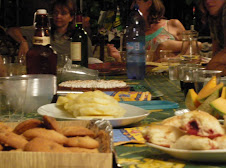
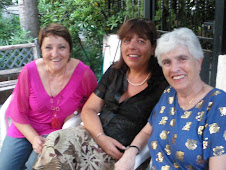




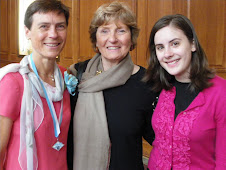
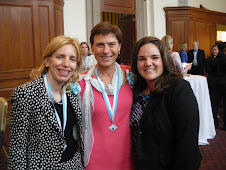


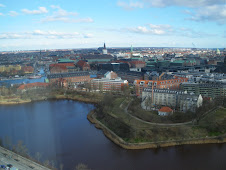
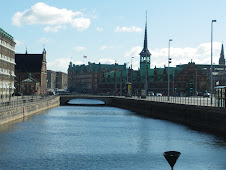
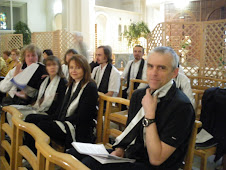
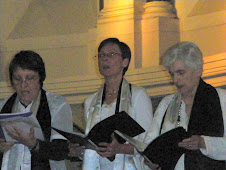


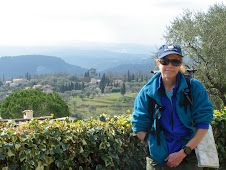
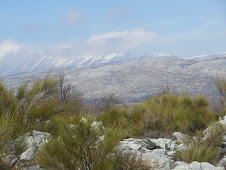
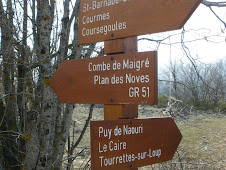
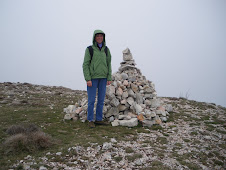

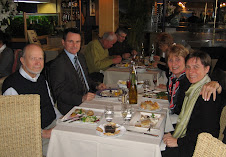


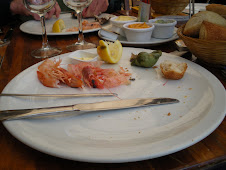
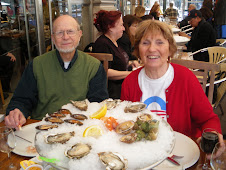
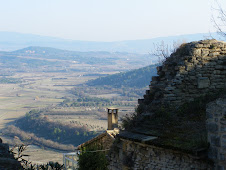
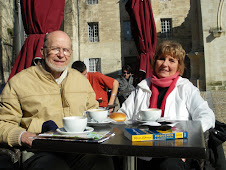


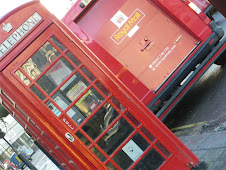
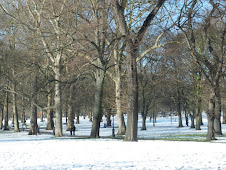
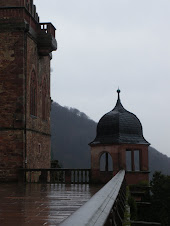
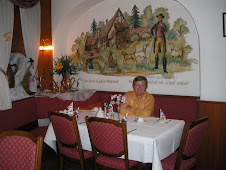
+of+IMG_0522.JPG)
+of+IMG_0505.JPG)
+of+IMG_0495.JPG)